

Can a Grinding Disc Be Sharpened?
As a supplier of grinding discs, I often encounter questions from customers about the maintainability and reusability of grinding discs. One of the most frequently asked questions is whether a grinding disc can be sharpened. In this blog post, I'll delve into this topic, exploring the science behind grinding discs, the possibility of sharpening them, and the practical implications for users.
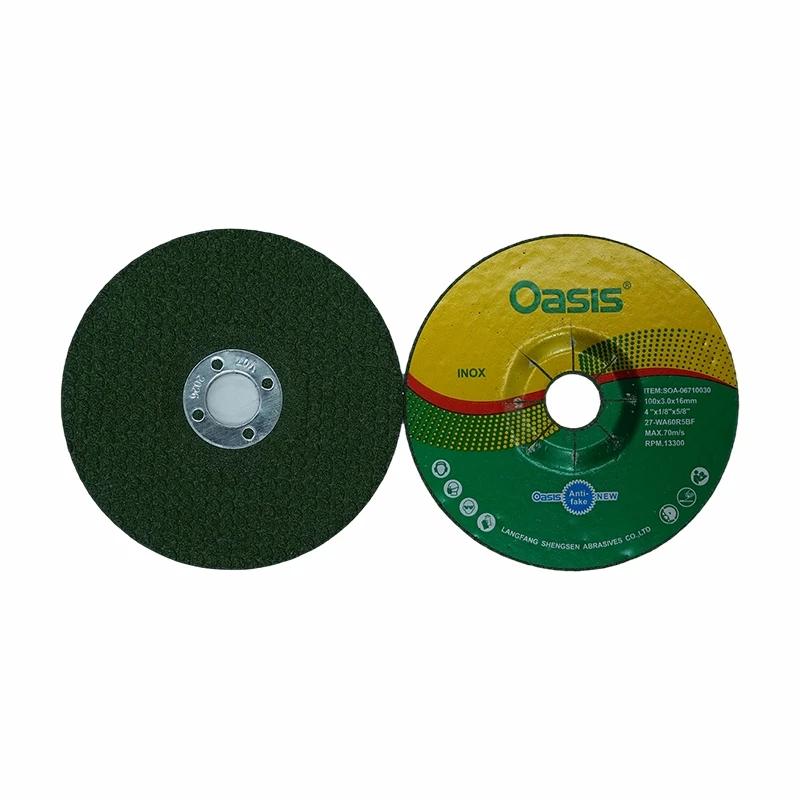

Understanding Grinding Discs
Before we discuss sharpening, it's essential to understand what grinding discs are and how they work. Grinding discs are abrasive tools used for various applications, including metalworking, woodworking, and stone grinding. They consist of abrasive grains bonded together by a matrix, which can be made of resin, vitrified materials, or other substances. The abrasive grains are responsible for cutting and removing material from the workpiece, while the matrix holds the grains in place and provides support.
There are different types of grinding discs available in the market, each designed for specific applications. For example, the Fish Scale Shaped Metal Grinding Disc is specifically engineered for metal grinding. Its unique fish - scale shape provides efficient material removal and long - lasting performance. Ceramic Straight Wheels are often used in precision grinding operations, offering high - speed cutting and excellent surface finish. And the Ceramic Corundum Grinding Disc is known for its high hardness and self - sharpening properties, making it suitable for heavy - duty grinding tasks.
The Wear Mechanism of Grinding Discs
During the grinding process, the abrasive grains on the grinding disc gradually wear down. As the grains come into contact with the workpiece, they break off small chips of material, but in the process, they also experience wear themselves. This wear can occur in several ways:
- Attritious wear: The abrasive grains gradually lose their sharp edges due to friction with the workpiece. This results in a decrease in the cutting efficiency of the grinding disc.
- Grain fracture: Under high - stress conditions, the abrasive grains may fracture, which can lead to a change in the cutting geometry of the disc.
- Bond wear: The matrix that holds the abrasive grains in place can also wear over time. If the bond wears too much, the abrasive grains may fall out prematurely, reducing the effectiveness of the grinding disc.
Can Grinding Discs Be Sharpened?
The answer to whether a grinding disc can be sharpened is not straightforward. It depends on several factors, including the type of grinding disc, the degree of wear, and the sharpening method.
- Some grinding discs can be partially sharpened: For example, certain types of ceramic grinding discs have self - sharpening properties. The ceramic abrasive grains are designed to fracture in a controlled manner during the grinding process, exposing new sharp edges. This self - sharpening mechanism helps to maintain the cutting efficiency of the disc over time. However, this is a natural process that occurs during normal use, and there isn't a traditional "sharpening" method in the sense of using a separate tool to restore the disc's sharpness.
- Limitations of sharpening: In general, most grinding discs are not designed to be sharpened in the same way as a knife or a saw blade. The abrasive grains are bonded to the matrix, and attempting to sharpen the disc using conventional methods can damage the bond and cause the grains to fall out. Moreover, the complex geometry of grinding discs makes it difficult to apply a uniform sharpening process.
Practical Considerations for Users
- Monitoring wear: Instead of trying to sharpen a grinding disc, users should focus on monitoring its wear. Regularly inspect the disc for signs of excessive wear, such as a decrease in cutting efficiency, increased vibration, or visible damage to the abrasive surface. If the disc is worn beyond a certain point, it should be replaced to ensure safe and efficient operation.
- Proper use and maintenance: To extend the life of a grinding disc, users should follow proper operating procedures. This includes using the correct speed, feed rate, and pressure during grinding. Additionally, keeping the disc clean and storing it in a dry environment can help prevent premature wear.
When to Replace a Grinding Disc
Knowing when to replace a grinding disc is crucial for both safety and performance. Here are some signs that indicate it's time to replace a grinding disc:
- Excessive wear: If the abrasive layer is significantly worn down, or if there are large areas where the abrasive grains have fallen out, the disc should be replaced.
- Cracks or damage: Any visible cracks, chips, or other damage to the grinding disc can compromise its structural integrity and pose a safety hazard.
- Reduced performance: If the disc is no longer cutting efficiently, producing a poor surface finish, or generating excessive heat, it may be time for a replacement.
Conclusion
In conclusion, while some grinding discs have self - sharpening properties, the concept of traditional sharpening as applied to other cutting tools is not applicable to most grinding discs. As a supplier, I recommend that users focus on proper use, monitoring wear, and timely replacement of grinding discs. This approach will ensure safe and efficient grinding operations, as well as optimal performance from the discs.
If you are in the market for high - quality grinding discs or have any questions about our products, we invite you to contact us for procurement and further discussion. Our team of experts is ready to assist you in selecting the right grinding disc for your specific needs.
References
- "Handbook of Abrasive Technology" by Ramesh Singh
- "Grinding: Theory and Applications of Machining with Abrasives" by Ingo Inasaki