

Can a Universal Grinding Disc be recycled?
Hey there! I'm a supplier of Universal Grinding Discs, and I often get asked this question: Can a Universal Grinding Disc be recycled? Well, let's dig into this topic and find out.
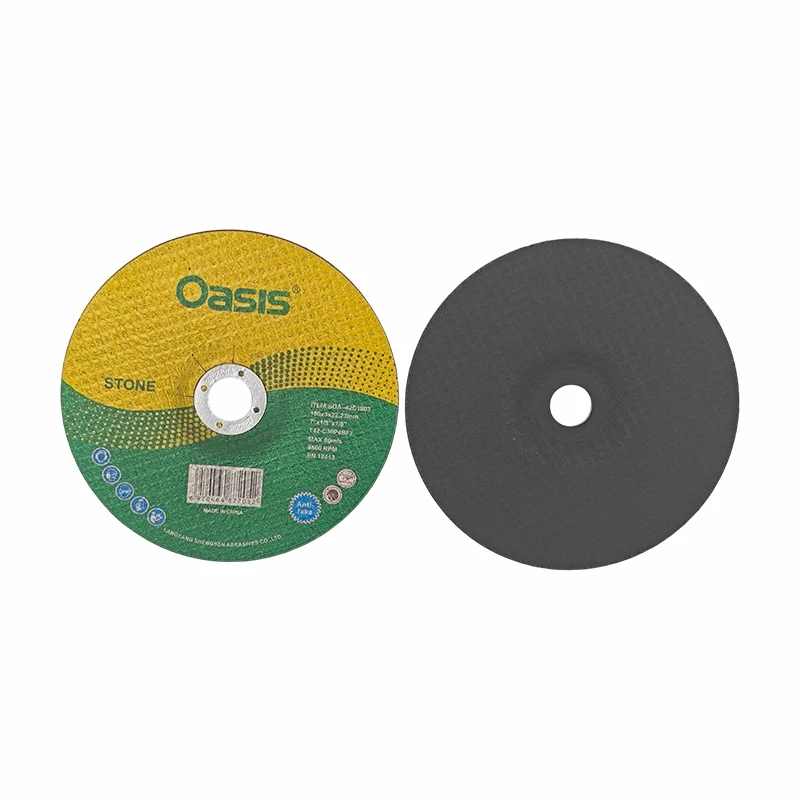
First off, what exactly is a Universal Grinding Disc? It's a versatile tool used in various industries for grinding, cutting, and finishing different materials. We've got different types, like the Silicon Carbide Grinding Disc and the Ceramic Corundum Grinding Disc. These discs are made up of abrasive grains bonded together, and they're designed to last through a lot of wear and tear.
Now, onto the big question: recycling. The answer isn't a simple yes or no. It depends on a few factors, like the materials the disc is made of and the condition it's in when it's ready to be discarded.
Let's start with the materials. Many Universal Grinding Discs are made from materials like silicon carbide, aluminum oxide, or ceramic corundum. Some of these materials can be recycled, but it's not always straightforward. For example, silicon carbide is a hard and durable material, and recycling it requires specialized processes. The recycling facilities need to be able to break down the disc and separate the silicon carbide from the bonding agents and other contaminants.
On the other hand, ceramic corundum is also a high - performance abrasive. Recycling ceramic corundum grinding discs can be a bit more challenging. The ceramic material has unique properties, and getting it back into a usable form requires advanced recycling techniques.
Another important factor is the condition of the disc. If a grinding disc is completely worn out, with the abrasive grains almost gone, it might not be worth recycling. The cost of recycling such a disc could be higher than the value of the recovered materials. However, if the disc has only minor wear, there's a better chance that it can be recycled.
So, what are the benefits of recycling Universal Grinding Discs? Well, for one, it's good for the environment. By recycling, we can reduce the amount of waste going into landfills. Grinding discs are made from natural resources, and recycling helps to conserve these resources. It also reduces the energy consumption associated with producing new discs from scratch.
From a business perspective, recycling can also save costs in the long run. For manufacturers, using recycled materials can be more cost - effective than sourcing new raw materials. And for end - users, recycling can potentially lead to lower prices for new grinding discs as the cost of production goes down.
Now, let's talk about the recycling process itself. When a grinding disc is sent for recycling, the first step is usually inspection. The recycler will check the disc to see if it's suitable for recycling. If it is, the disc is then cleaned to remove any dirt, debris, or contaminants.
After cleaning, the disc goes through a process of separation. This involves breaking down the disc and separating the abrasive material from the bonding agents. Different methods are used depending on the materials. For example, heat treatment might be used to break down the bonding agents, and then physical separation techniques are used to isolate the abrasive grains.
Once the abrasive material is separated, it's further processed to ensure its quality. It might be crushed, sorted, and graded to make it suitable for reuse in new grinding discs.
As a supplier, I'm always looking for ways to promote recycling. We work with recycling facilities to ensure that our used grinding discs are given a second life. We also educate our customers about the importance of recycling and provide information on how they can recycle their used discs.
We offer a wide range of Universal Grinding Discs, including the Silicon Carbide Grinding Disc, Ceramic Corundum Grinding Disc, and Ceramic Straight Wheels. Our products are known for their high quality and performance, and we're committed to making them as environmentally friendly as possible.
If you're in the market for Universal Grinding Discs, or if you have any questions about recycling, don't hesitate to reach out. We're here to help you make the right choices for your grinding needs. Whether you're a small workshop or a large industrial manufacturer, we've got the products and the knowledge to support you.
In conclusion, while recycling Universal Grinding Discs isn't always easy, it's definitely possible and beneficial. With the right processes and a commitment from all stakeholders, we can make a significant impact on the environment and the economy. So, if you're thinking about your next grinding disc purchase, consider the environmental aspect and the potential for recycling.
If you're interested in learning more about our products or discussing your specific requirements, feel free to get in touch. We're ready to have a conversation about how we can work together to meet your grinding needs and contribute to a more sustainable future.
References
- "Abrasive Recycling Technologies: An Overview" - Journal of Materials Recycling
- "Environmental Impact of Grinding Disc Production and Recycling" - International Journal of Sustainable Manufacturing