

The chemical environment plays a pivotal role in influencing the performance, durability, and overall quality of grinding discs. As a supplier of a wide range of grinding discs, including the Fish Scale Shaped Metal Grinding Disc, Silicon Carbide Grinding Disc, and Universal Grinding Disc, I have witnessed firsthand how different chemical conditions can have a profound impact on these essential tools.
Corrosion and Oxidation
One of the most significant ways the chemical environment affects grinding discs is through corrosion and oxidation. When grinding discs are exposed to corrosive substances such as acids, alkalis, or salts, the metal components of the disc can begin to corrode. This corrosion can weaken the structure of the disc, leading to premature wear and reduced performance. For example, in industrial settings where grinding is often carried out in the presence of chemicals, such as in chemical manufacturing plants or metal plating facilities, the risk of corrosion is particularly high.
Oxidation is another chemical process that can affect grinding discs. When the metal in the disc reacts with oxygen in the air, it forms metal oxides. These oxides can cause the disc to become brittle and less effective at grinding. In high - temperature environments, oxidation occurs more rapidly. For instance, during high - speed grinding operations, the heat generated can accelerate the oxidation process, reducing the lifespan of the grinding disc.
Chemical Abrasion
The chemical environment can also cause abrasion on grinding discs through chemical reactions. Some chemicals can react with the abrasive particles on the disc, altering their shape and size. For example, certain acids can dissolve the abrasive materials, reducing their cutting ability. In environments where the grinding disc comes into contact with reactive chemicals, the rate of chemical abrasion can be much higher than normal mechanical abrasion.
In addition, the presence of contaminants in the chemical environment can also cause additional abrasion. Dust particles, metal shavings, and other debris can mix with the chemicals and act as abrasives themselves. These contaminants can scratch the surface of the grinding disc, leading to uneven wear and reduced performance.

Impact on Bonding Agents
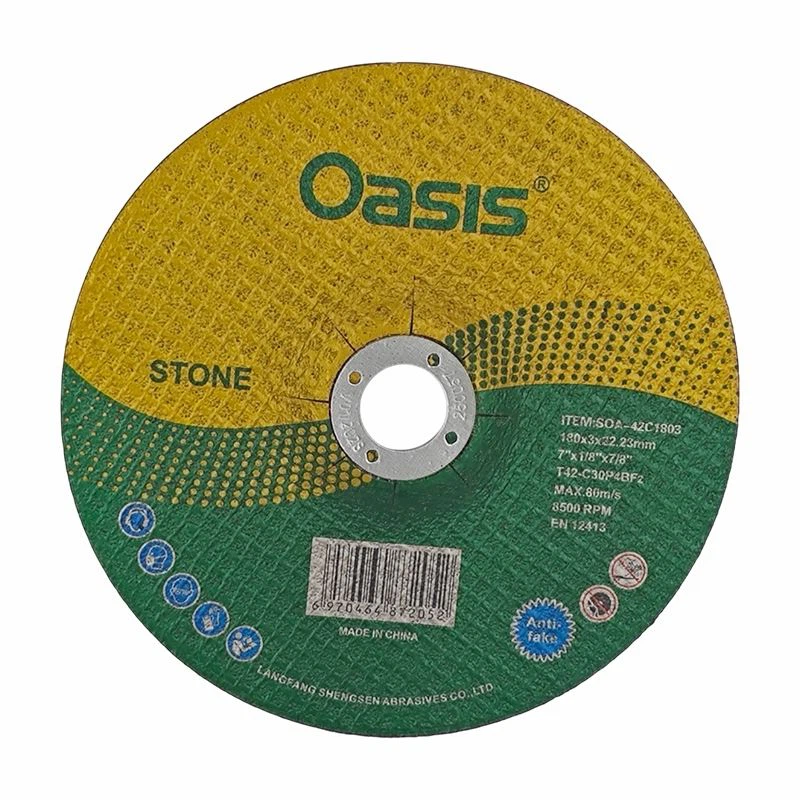
Grinding discs are typically held together by bonding agents. The chemical environment can have a significant impact on these bonding agents. Some chemicals can break down the bonding agents, causing the abrasive particles to loosen from the disc. This can lead to a loss of cutting power and an increased risk of the disc falling apart during use.
For example, in a highly alkaline environment, certain types of bonding agents may be more susceptible to degradation. The alkaline chemicals can react with the bonding material, weakening its structure. Similarly, in a solvent - rich environment, the solvents can dissolve the bonding agents, resulting in a loss of integrity of the grinding disc.
Influence on Friction and Heat Generation
The chemical environment can also affect the friction between the grinding disc and the workpiece. Some chemicals can act as lubricants, reducing the friction between the two surfaces. While this may seem beneficial at first, it can actually have a negative impact on the grinding process. Reduced friction can lead to less efficient grinding, as the disc may not be able to grip the workpiece effectively.
On the other hand, some chemicals can increase friction. This can result in excessive heat generation during grinding. High temperatures can not only cause oxidation and thermal damage to the grinding disc but also affect the properties of the workpiece. For example, in metal grinding, excessive heat can cause the metal to harden or warp, leading to poor - quality finished products.
Compatibility with Different Chemical Environments
As a grinding disc supplier, we understand the importance of providing discs that are compatible with different chemical environments. Our Fish Scale Shaped Metal Grinding Disc is designed to be more resistant to corrosion and chemical abrasion in metal - related grinding applications. It is made with high - quality metals and abrasives that can withstand the harsh chemical conditions often found in metalworking industries.
The Silicon Carbide Grinding Disc is suitable for applications where the chemical environment is less corrosive but requires high - performance abrasion. Silicon carbide is a very hard and chemically stable abrasive material, making it ideal for grinding non - ferrous metals and other materials in a variety of chemical settings.
Our Universal Grinding Disc is a versatile option that can be used in a wide range of chemical environments. It is designed with a strong bonding agent and high - quality abrasive particles that can resist the effects of different chemicals, providing consistent performance.
Mitigating the Effects of the Chemical Environment
To mitigate the effects of the chemical environment on grinding discs, several measures can be taken. First, proper storage of grinding discs is crucial. Storing the discs in a dry, clean environment away from chemicals can prevent premature corrosion and degradation.
Second, using protective coatings on the grinding discs can help. These coatings can act as a barrier between the disc and the chemical environment, reducing the risk of corrosion and chemical abrasion.
Finally, selecting the right grinding disc for the specific chemical environment is essential. Different types of grinding discs are designed to be more resistant to certain chemicals. By choosing the appropriate disc, users can ensure optimal performance and a longer lifespan for their grinding tools.
Conclusion
In conclusion, the chemical environment has a far - reaching impact on grinding discs. From corrosion and oxidation to chemical abrasion and effects on bonding agents, every aspect of the grinding disc can be affected. As a supplier, we are committed to providing high - quality grinding discs that can withstand various chemical environments.
If you are in need of grinding discs for your specific application, we invite you to contact us for more information. Our team of experts can help you select the most suitable grinding disc based on your chemical environment and grinding requirements. We look forward to discussing your needs and providing you with the best solutions for your grinding operations.
References
- Kalpakjian, S., & Schmid, S. R. (2009). Manufacturing Engineering and Technology. Pearson Prentice Hall.
- Schey, J. A. (1987). Tribology in Metalworking: Friction, Lubrication, and Wear. American Society for Metals.
- Trumpler, R. (1999). Abrasive Technology: The Complete Guide to Abrasive Machining. Society of Manufacturing Engineers.