

The grinding process is a crucial operation in various industries, including metalworking, woodworking, and construction. It involves the use of a grinding disc to remove material from a workpiece, achieving the desired shape, finish, and dimensional accuracy. One of the key factors that significantly influence the grinding process is the diameter of the grinding disc. As a leading grinding disc supplier, I will delve into how the diameter of a grinding disc affects the grinding process.
1. Material Removal Rate
The material removal rate (MRR) is a fundamental aspect of the grinding process, representing the amount of material removed from the workpiece per unit of time. A larger - diameter grinding disc generally leads to a higher material removal rate. This is because a larger disc has a greater contact area with the workpiece. When the grinding disc rotates, more abrasive grains come into contact with the workpiece surface simultaneously.
For example, in metal fabrication, when using a Ceramic Corundum Grinding Disc with a larger diameter, the increased contact area allows for more efficient cutting and removal of metal chips. The abrasive grains on the larger disc can engage with a wider swath of the workpiece, enabling a faster removal of material. This is particularly beneficial in applications where large amounts of material need to be removed quickly, such as rough grinding operations on thick metal plates.
On the other hand, a smaller - diameter grinding disc has a smaller contact area. As a result, the number of abrasive grains in contact with the workpiece at any given time is limited. This leads to a lower material removal rate. However, in some cases, a lower MRR can be advantageous. For instance, in precision grinding operations where only a small amount of material needs to be removed to achieve a high - quality finish, a smaller - diameter disc can provide more control over the grinding process.
2. Surface Finish
The surface finish of the workpiece is another critical factor affected by the diameter of the grinding disc. A larger - diameter grinding disc tends to produce a coarser surface finish. This is because the larger contact area can cause more aggressive cutting action. The increased force exerted by the larger disc on the workpiece can lead to larger grooves and scratches on the surface.
In contrast, a smaller - diameter grinding disc can produce a finer surface finish. The smaller contact area results in a more localized and gentle grinding action. The abrasive grains on a small - diameter disc interact with the workpiece in a more controlled manner, leaving behind smaller and less noticeable marks on the surface. For example, when using a Silicon Carbide Grinding Disc of a smaller diameter in woodworking applications, it can create a smoother surface on the wood, which is ideal for finishing touches.
However, it's important to note that other factors such as the type of abrasive material, the grinding speed, and the feed rate also play significant roles in determining the surface finish. A proper combination of these factors is necessary to achieve the desired surface quality.
3. Grinding Force and Power Consumption
The diameter of the grinding disc has a direct impact on the grinding force and power consumption. A larger - diameter grinding disc requires more power to operate. This is because the larger mass of the disc and the increased contact area with the workpiece result in higher frictional forces. To overcome these forces and maintain the required rotational speed, a more powerful motor is needed.
In industrial grinding applications, the increased power consumption of larger - diameter discs can lead to higher operating costs. Additionally, the higher grinding force can put more stress on the grinding machine and the workpiece. This may require more robust machinery and fixtures to ensure stable and accurate grinding operations.
Conversely, a smaller - diameter grinding disc consumes less power. The reduced mass and contact area result in lower frictional forces, which means less energy is needed to rotate the disc. This can be an advantage in applications where energy efficiency is a priority, such as in portable grinding tools. The lower grinding force also places less stress on the equipment and the workpiece, reducing the risk of damage.
4. Grinding Precision
Grinding precision refers to the ability to achieve the desired dimensions and shape of the workpiece. A smaller - diameter grinding disc offers better grinding precision. The smaller contact area allows for more precise control over the grinding process. Operators can more easily target specific areas of the workpiece and make fine adjustments to the grinding operation.
For example, in the manufacturing of small - sized components with tight tolerances, a Universal Grinding Disc of a smaller diameter can be used to accurately grind the edges and surfaces. The reduced size of the disc enables more detailed work and better adherence to the required specifications.
Larger - diameter grinding discs, while useful for rapid material removal, may have limitations in terms of precision. The large contact area makes it more difficult to control the grinding process precisely, especially when dealing with complex shapes or small - scale features.
5. Application Suitability
The choice of grinding disc diameter depends on the specific application. In heavy - duty grinding applications, such as grinding large metal blocks or removing thick layers of rust, a larger - diameter grinding disc is often preferred. The high material removal rate and the ability to handle large workpieces make it suitable for these types of tasks.
In contrast, for delicate grinding operations, such as finishing small parts or grinding intricate shapes, a smaller - diameter grinding disc is the better option. The fine surface finish and high precision it can provide are essential for these applications.
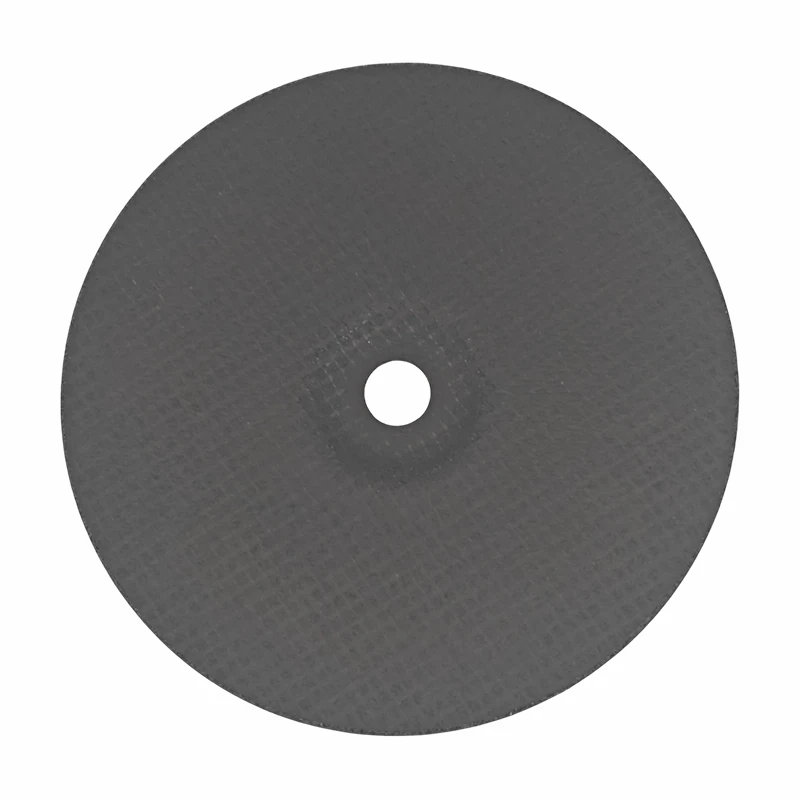

As a grinding disc supplier, we offer a wide range of grinding discs with different diameters to meet the diverse needs of our customers. Whether you need a large - diameter disc for heavy - duty work or a small - diameter disc for precision grinding, we have the right product for you.
Conclusion
In conclusion, the diameter of a grinding disc has a profound impact on the grinding process. It affects the material removal rate, surface finish, grinding force, power consumption, grinding precision, and application suitability. Understanding these relationships is crucial for selecting the appropriate grinding disc for a specific task.
If you are in the market for high - quality grinding discs, we invite you to contact us for procurement and further discussions. Our team of experts is ready to assist you in choosing the right grinding disc based on your requirements.
References
- Trent, E. M., & Wright, P. K. (2000). Metal Cutting. Butterworth - Heinemann.
- Rowe, W. B. (2009). Principles of Modern Grinding Technology. Springer.
- Shaw, M. C. (2005). Metal Cutting Principles. Oxford University Press.