

The grit size of a cutting disc inox plays a pivotal role in determining the efficiency, quality, and overall outcome of the cutting process. As a supplier of cutting disc inox, I have witnessed firsthand how different grit sizes can significantly impact various aspects of cutting operations. In this blog, we will delve into the science behind grit size and explore its effects on the cutting process.
Understanding Grit Size
Grit size refers to the size of the abrasive particles embedded in the cutting disc. It is typically measured by a numerical value, with smaller numbers indicating larger grit particles and larger numbers representing smaller grit particles. For example, a 24 - grit cutting disc has larger abrasive particles compared to a 120 - grit disc.
The grit size is a crucial characteristic because it directly influences the cutting action of the disc. Larger grit particles are more aggressive and can remove material quickly, while smaller grit particles provide a smoother finish and are better suited for precision cutting.
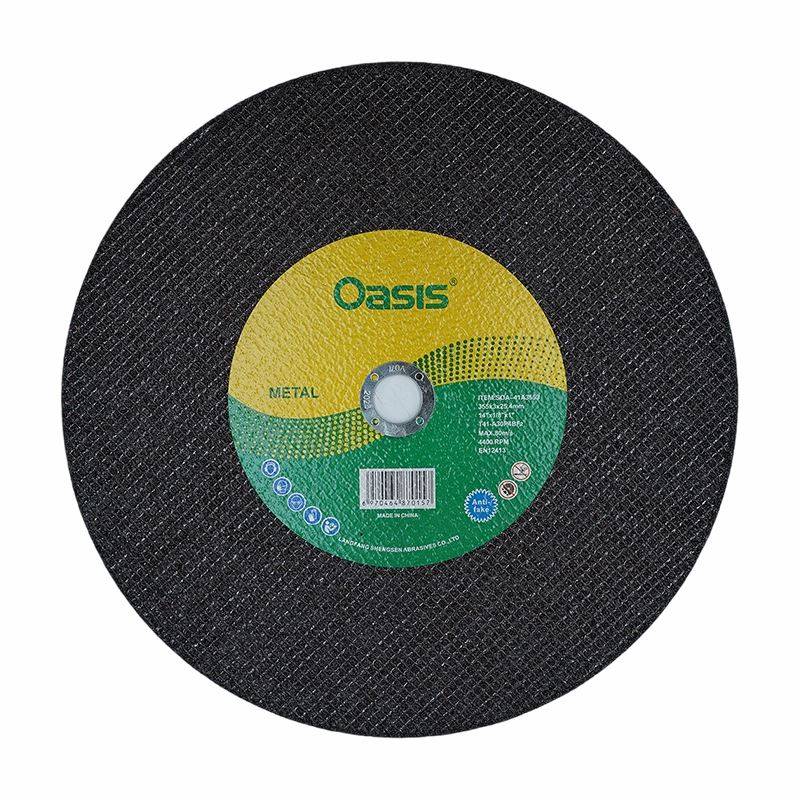

Impact on Cutting Speed
One of the most significant ways grit size affects the cutting process is through its impact on cutting speed. Larger grit sizes, such as 24 - 36 grit, are designed for rapid material removal. The large abrasive particles can bite into the material more aggressively, allowing for faster cutting. This makes them ideal for applications where speed is of the essence, such as rough cutting or cutting thick materials.
For instance, when cutting thick stainless steel plates, a 24 - grit Universal Cutting Disc can quickly slice through the material, reducing the overall cutting time. However, it's important to note that the faster cutting speed comes at the cost of a rougher cut surface.
On the other hand, smaller grit sizes, like 80 - 120 grit, cut more slowly. The smaller abrasive particles have less material - removing power, but they can make more precise cuts. These discs are often used for finishing cuts or when a smooth surface finish is required. For example, when cutting thin stainless steel sheets for decorative purposes, a 120 - grit disc can provide a clean and smooth cut, enhancing the aesthetic appeal of the final product.
Effect on Surface Finish
The grit size of a cutting disc inox also has a profound effect on the surface finish of the cut material. Larger grit sizes leave a rougher surface finish due to the aggressive cutting action of the large abrasive particles. The cut surface may have visible grooves and unevenness, which may require additional finishing processes if a smooth surface is desired.
In contrast, smaller grit sizes produce a smoother surface finish. The smaller abrasive particles make finer cuts, resulting in a more polished and even surface. This is particularly important in applications where the appearance of the cut edge matters, such as in architectural or decorative metalwork. A Diamond Cutting Disc with a fine grit size can be used to achieve a high - quality surface finish on stainless steel components.
Influence on Tool Life
Grit size can also affect the tool life of the cutting disc. Larger grit sizes tend to wear out more quickly because the large abrasive particles are more likely to break off or become dull during the cutting process. The aggressive cutting action puts more stress on the abrasive particles, causing them to degrade faster.
Smaller grit sizes, however, generally have a longer tool life. The smaller particles are less likely to break off, and they can maintain their cutting edge for a longer period. This means that although smaller grit discs may be more expensive upfront, they can be more cost - effective in the long run, especially for applications that require a large number of cuts.
Considerations for Different Materials
The choice of grit size also depends on the material being cut. Different materials have different hardness and toughness characteristics, which require different cutting approaches.
When cutting soft materials, such as aluminum, larger grit sizes can be used to achieve a fast and efficient cut. The large abrasive particles can easily penetrate the soft material, making the cutting process quicker. A Rail Cutting Disc with a relatively large grit size can be suitable for cutting aluminum rails.
For harder materials, like high - grade stainless steel or titanium, smaller grit sizes are often preferred. These materials are more difficult to cut, and smaller abrasive particles can provide better control and a cleaner cut. A fine - grit cutting disc can prevent the material from overheating and reduce the risk of deformation during the cutting process.
Applications and Grit Size Selection
In construction and heavy - duty industrial applications, where large amounts of material need to be removed quickly, large - grit cutting discs are commonly used. For example, in the construction of steel structures, 36 - grit discs are often employed for rough cutting of steel beams and columns.
In the manufacturing of precision components, such as in the aerospace or automotive industries, smaller - grit discs are the norm. These industries require high - quality cuts with smooth surface finishes, and 100 - 120 grit discs are typically used to meet these requirements.
Conclusion
In summary, the grit size of a cutting disc inox is a critical factor that affects the cutting process in multiple ways. It determines the cutting speed, surface finish, tool life, and is also influenced by the material being cut. As a supplier of cutting disc inox, I understand the importance of choosing the right grit size for different applications.
If you are in need of cutting disc inox for your specific cutting requirements, I encourage you to contact us for a detailed discussion. We can help you select the most appropriate grit size and type of cutting disc to ensure optimal performance and cost - effectiveness in your cutting operations.
References
- Smith, J. (2018). Abrasive Cutting Tools: Principles and Applications. Industrial Press.
- Johnson, R. (2020). The Science of Cutting Discs. Cutting Technology Journal, 15(2), 45 - 52.
- Brown, A. (2019). Selecting the Right Grit Size for Cutting Operations. Manufacturing Insights, 22(3), 78 - 85.