

As a supplier of Universal Flap Discs, I've witnessed firsthand how the type of abrasive used in these discs can significantly influence their performance. Universal Flap Discs, available at Universal Flap Disc, are versatile tools widely used in metalworking, woodworking, and other industries for grinding, blending, and finishing tasks. In this blog, I'll delve into the various types of abrasives commonly used in Universal Flap Discs and explore how they impact the disc's performance.
Aluminum Oxide Abrasives
Aluminum oxide is one of the most commonly used abrasives in Universal Flap Discs. It is known for its durability, versatility, and cost - effectiveness. The aluminum oxide grains are tough and can withstand high - pressure grinding operations.
One of the key advantages of aluminum oxide abrasives is their self - sharpening property. As the abrasive grains wear down during use, they break off to expose fresh, sharp edges. This ensures consistent cutting performance throughout the life of the flap disc. For general - purpose grinding on a variety of materials such as mild steel, stainless steel, and non - ferrous metals, aluminum oxide flap discs are an excellent choice.
However, aluminum oxide abrasives may not be the best option for very hard materials. When used on extremely hard metals, the abrasive grains may dull more quickly, reducing the disc's cutting efficiency. Also, in high - speed grinding applications, the heat generated can cause the aluminum oxide grains to break down faster, leading to a shorter lifespan of the flap disc.
Zirconia Alumina Abrasives
Zirconia alumina abrasives are a step up from aluminum oxide in terms of performance, especially for heavy - duty grinding tasks. These abrasives are made by fusing zirconium oxide and aluminum oxide, resulting in a tougher and more heat - resistant abrasive grain.
Zirconia alumina flap discs are highly suitable for grinding hard materials such as high - carbon steel, alloy steel, and cast iron. The unique structure of zirconia alumina grains allows them to maintain their sharpness even under high - pressure and high - heat conditions. This means that they can cut through tough materials more quickly and with less effort compared to aluminum oxide abrasives.
The heat resistance of zirconia alumina also contributes to a longer lifespan of the flap disc. In high - speed grinding operations, where a large amount of heat is generated, zirconia alumina abrasives can withstand the heat without significant degradation. This makes them ideal for industrial applications where productivity and efficiency are crucial.
On the downside, zirconia alumina abrasives are more expensive than aluminum oxide. This higher cost may be a deterrent for some users, especially those with budget constraints or for light - duty applications where the extra performance of zirconia alumina is not necessary.
Ceramic Alumina Abrasives
Ceramic alumina abrasives are the top - of - the - line option when it comes to Universal Flap Discs. They are made from a high - purity ceramic material that offers exceptional hardness and cutting performance.
One of the most significant advantages of ceramic alumina abrasives is their ability to self - sharpen continuously during use. The ceramic grains fracture in a way that creates new, sharp cutting edges, allowing the flap disc to maintain a high cutting rate throughout its life. This makes ceramic alumina flap discs extremely efficient for grinding and finishing tasks.
Ceramic alumina abrasives are also highly heat - resistant. They can handle high - speed grinding operations with ease, even on the hardest materials. In applications where precision and a high - quality finish are required, such as in the aerospace and automotive industries, ceramic alumina flap discs are often the preferred choice.
However, ceramic alumina flap discs are the most expensive type. Their high cost is due to the complex manufacturing process and the high - quality raw materials used. Additionally, they may be too aggressive for some soft materials, as they can remove material too quickly, potentially damaging the workpiece.
Silicon Carbide Abrasives
Silicon carbide abrasives are commonly used in Universal Flap Discs for specific applications. They are known for their extreme hardness and sharpness, making them ideal for grinding non - ferrous metals, ceramics, and glass.
Silicon carbide flap discs can cut through these materials very quickly, thanks to their sharp abrasive grains. They are also effective for finishing operations, as they can produce a smooth surface finish. In woodworking, silicon carbide flap discs are used for sanding and shaping wood, especially for fine - grain woods where a smooth finish is desired.
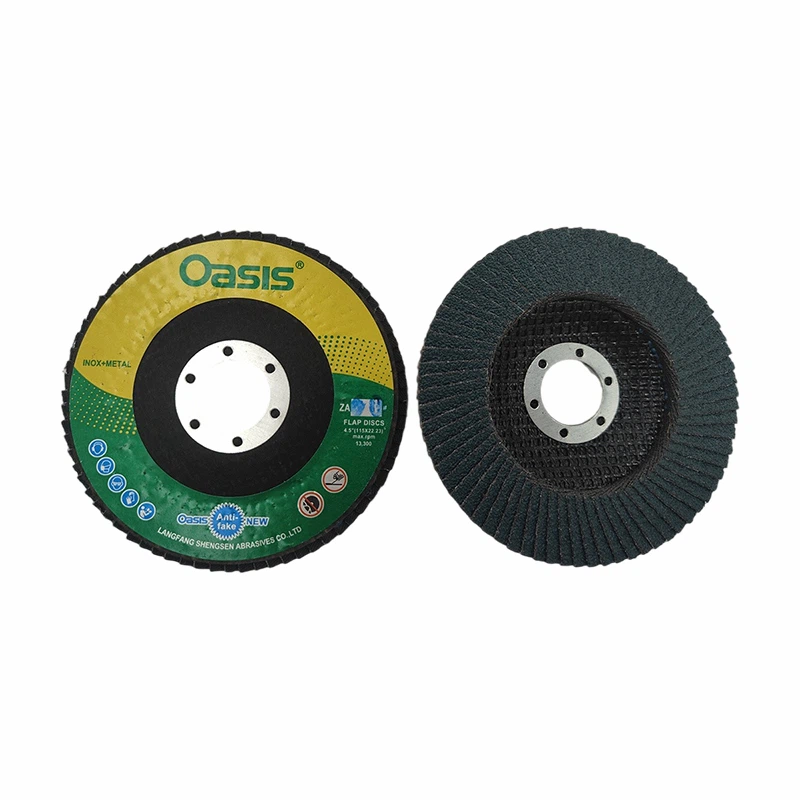

One of the limitations of silicon carbide abrasives is their relatively low toughness compared to aluminum oxide, zirconia alumina, and ceramic alumina. They are more prone to breaking and chipping, especially when used on hard metals. Therefore, they are not suitable for heavy - duty grinding of ferrous metals.
Impact on Performance Metrics
The type of abrasive in a Universal Flap Disc affects several performance metrics, including cutting speed, lifespan, surface finish, and cost - effectiveness.
- Cutting Speed: As discussed above, abrasives like zirconia alumina and ceramic alumina offer higher cutting speeds, especially on hard materials. They can remove material more quickly, which is crucial for increasing productivity in industrial settings. On the other hand, aluminum oxide and silicon carbide have more moderate cutting speeds, which may be sufficient for lighter - duty tasks.
- Lifespan: The lifespan of a flap disc is closely related to the durability of the abrasive. Ceramic alumina and zirconia alumina abrasives generally have longer lifespans due to their heat resistance and self - sharpening properties. Aluminum oxide has a decent lifespan for general - purpose use, while silicon carbide may have a shorter lifespan, especially when used on inappropriate materials.
- Surface Finish: The type of abrasive also affects the surface finish of the workpiece. Silicon carbide is known for producing a smooth finish, making it suitable for finishing operations. Aluminum oxide can provide a good balance between material removal and surface finish, while zirconia alumina and ceramic alumina are more focused on high - speed material removal and may require additional finishing steps for a very smooth surface.
- Cost - Effectiveness: Cost - effectiveness is a key consideration for many users. Aluminum oxide flap discs are the most cost - effective option for general - purpose use. Zirconia alumina and ceramic alumina offer higher performance but come at a higher cost. Silicon carbide is suitable for specific applications but may not be the most cost - effective for all tasks.
Conclusion
In conclusion, the type of abrasive in a Universal Flap Disc plays a crucial role in determining its performance. Each type of abrasive has its own strengths and weaknesses, and the choice of abrasive depends on the specific application, the material being worked on, and the user's budget.
As a supplier of Universal Flap Discs, we understand the importance of providing the right product for our customers' needs. Whether you need a cost - effective aluminum oxide flap disc for general - purpose grinding or a high - performance ceramic alumina flap disc for heavy - duty industrial applications, we have a wide range of options available at Universal Flap Disc.
If you're interested in learning more about our Universal Flap Discs or would like to discuss your specific requirements, we encourage you to reach out to us for a detailed consultation. Our team of experts is ready to assist you in making the best choice for your grinding and finishing needs.
References
- "Abrasive Technology Handbook", by various authors
- Industry reports on abrasive materials and their applications
- Technical specifications provided by abrasive manufacturers.