

Hey there! As a flap disc supplier, I often get asked about how smooth of a finish a flap disc can achieve. Well, let's dive right into it and explore this topic in detail.
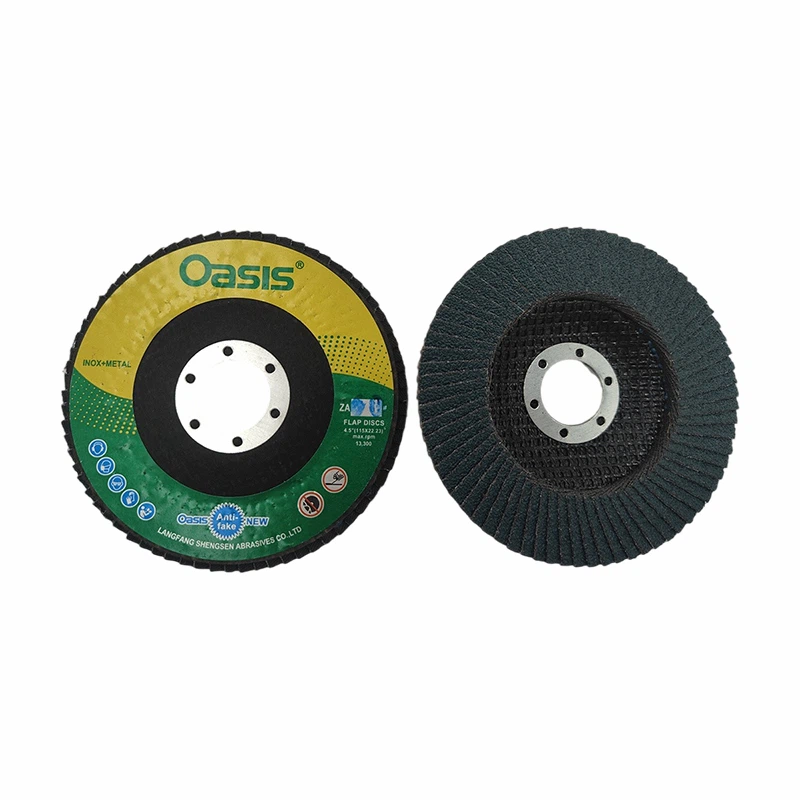
First off, what exactly is a flap disc? For those who might not know, a flap disc is a type of abrasive tool that consists of multiple overlapping abrasive flaps attached to a backing plate. These flaps are usually made of abrasive materials like aluminum oxide or zirconia alumina. Flap discs are commonly used in metalworking, woodworking, and other industries for grinding, blending, and finishing surfaces.
Now, onto the main question - how smooth of a finish can a flap disc achieve? The answer depends on several factors, such as the type of abrasive material, the grit size, the application method, and the surface being worked on.
Let's start with the abrasive material. Different abrasive materials have different cutting capabilities and wear characteristics. Aluminum oxide is a popular choice for general-purpose applications. It's relatively inexpensive and can provide a decent finish on a variety of materials. Zirconia alumina, on the other hand, is more durable and aggressive. It's great for heavy-duty grinding and can also produce a smooth finish, especially on tough metals.
The grit size of the flap disc is another crucial factor. Grit size refers to the number of abrasive particles per square inch on the flap. A lower grit number, like 36 or 40, means larger abrasive particles and a more aggressive cut. These are typically used for rough grinding and removing large amounts of material quickly. As the grit number increases, say to 80, 120, or even 220, the abrasive particles get smaller, and the finish becomes smoother. For example, a 220-grit flap disc can produce a very fine finish that's almost polished.
The application method also plays a role in the final finish. When using a flap disc, it's important to apply the right amount of pressure. Too much pressure can cause uneven grinding and a rougher finish, while too little pressure may not remove enough material. It's also a good idea to move the flap disc in a smooth, consistent motion across the surface. This helps to ensure an even finish and prevents any streaks or scratches.
The surface being worked on is yet another factor. Different materials have different hardness and texture, which can affect how well a flap disc can achieve a smooth finish. For instance, working on a soft metal like aluminum might be easier than working on a hard alloy steel. The surface preparation before using the flap disc also matters. If the surface has a lot of rust, paint, or other contaminants, it's a good idea to clean it first. This allows the flap disc to work more effectively and achieve a better finish.
In my experience as a flap disc supplier, I've seen some amazing results. With the right combination of abrasive material, grit size, and application method, a flap disc can achieve a finish that's comparable to other more expensive finishing methods. For example, in the automotive industry, flap discs are often used to prepare surfaces for painting. A smooth finish is essential to ensure a high-quality paint job. And with the right flap disc, you can get that smooth finish without breaking the bank.
One of our popular products is the Universal Flap Disc. This flap disc is designed to work on a wide range of materials, including metals, wood, and plastics. It comes in various grit sizes, so you can choose the one that's right for your specific application. Whether you're doing rough grinding or fine finishing, the Universal Flap Disc can get the job done.
Let's take a look at some real-world examples. A customer who works in a metal fabrication shop was having trouble getting a smooth finish on some stainless steel parts. They tried using different grinding wheels, but the results were less than satisfactory. After switching to our 120-grit Universal Flap Disc, they were amazed at the difference. The flap disc was able to remove the rough edges and produce a smooth, even finish. This not only improved the appearance of the parts but also saved them time and money in the long run.
Another customer was working on a woodworking project. They needed to sand down some rough wooden surfaces to a smooth finish. Our 220-grit flap disc was the perfect solution. It was able to quickly and easily remove the rough spots and leave a beautiful, smooth surface that was ready for staining or painting.
So, in conclusion, a flap disc can achieve a very smooth finish, depending on the factors we've discussed. By choosing the right abrasive material, grit size, and application method, you can get the results you want. Whether you're a professional in the manufacturing industry or a DIY enthusiast, a good flap disc is an essential tool in your arsenal.
If you're interested in learning more about our flap discs or have any questions about achieving a smooth finish, don't hesitate to get in touch. We're always happy to help and can provide you with the right advice and products for your specific needs. Whether you're looking for a rough-grinding flap disc or a fine-finishing one, we've got you covered. Contact us today to start a conversation about your flap disc requirements and let's work together to get the perfect finish for your projects.

References
- Abrasive Engineering Handbook
- Metalworking Industry Best Practices Guide