

As a seasoned felt wheel supplier, I've had the privilege of delving deep into the intricate world of felt wheels and understanding what goes into creating a high - quality product. In this blog, I'll share with you the key components that make up a top - notch felt wheel, drawing on my years of experience in the industry.

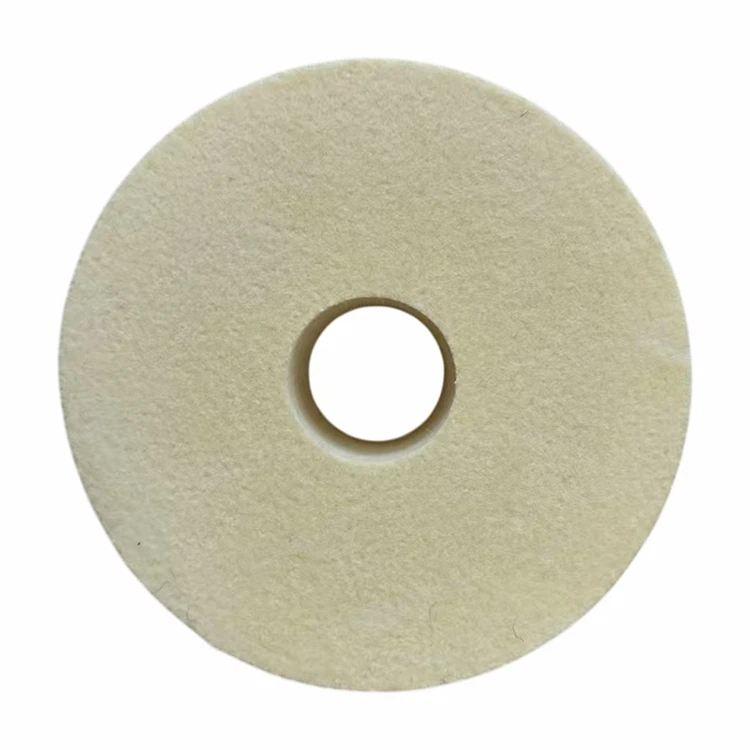
The Core Material: Wool
Wool is the heart and soul of a high - quality felt wheel. It offers a unique combination of properties that make it ideal for various applications. Firstly, wool fibers are naturally elastic. This elasticity allows the felt wheel to conform to the shape of the workpiece during the polishing or grinding process. Whether it's a curved surface or an irregularly shaped object, the wool felt wheel can adapt, ensuring an even and consistent finish.
Secondly, wool has excellent heat resistance. During the polishing process, friction generates heat. If the material of the felt wheel cannot withstand high temperatures, it may start to break down, lose its shape, or even cause damage to the workpiece. Wool fibers can handle the heat generated during normal polishing operations without significant degradation, making them reliable for extended use.
There are different grades of wool used in felt wheels. The higher - grade wools, such as merino wool, are known for their fine fibers. These fine fibers result in a smoother surface finish on the workpiece. When you use a felt wheel made from high - grade wool, you can achieve a mirror - like polish on metals, plastics, and other materials. On the other hand, coarser wools may be used for more heavy - duty applications where a more aggressive polishing or grinding action is required.
You can explore our range of Wool Felt Wheel to see the different types of wool we use and how they are tailored to specific needs.
Binders and Adhesives
In some cases, binders and adhesives are used in the composition of felt wheels. These substances serve several important functions. Firstly, they help to hold the wool fibers together. This is especially important for felt wheels that are used in high - speed applications. Without proper binding, the fibers could start to come loose during operation, which not only reduces the effectiveness of the felt wheel but also poses a safety hazard.
Binders also play a role in enhancing the durability of the felt wheel. They can fill in the gaps between the wool fibers, creating a more solid and compact structure. This makes the felt wheel more resistant to wear and tear, increasing its lifespan. However, it's crucial to use high - quality binders that are compatible with the wool fibers. Low - quality binders may cause the felt wheel to become brittle over time or may leave residues on the workpiece.
Density and Thickness
The density and thickness of a felt wheel are critical factors in determining its performance. Density refers to how closely packed the wool fibers are within the felt wheel. A higher - density felt wheel is generally more suitable for applications that require a finer finish. The closely packed fibers provide more contact points with the workpiece, allowing for a more precise and uniform polishing action.
Thickness, on the other hand, affects the durability and the amount of material that can be removed during the polishing process. Thicker felt wheels can withstand more wear and are often used for heavy - duty applications. They also have a greater capacity to hold polishing compounds, which can improve the efficiency of the polishing process.
When choosing a felt wheel, it's important to consider the specific requirements of your application. For example, if you're working on a delicate piece of jewelry, a low - density and thinner felt wheel may be more appropriate to avoid over - polishing. For industrial applications where large amounts of material need to be removed, a high - density and thicker felt wheel would be a better choice. You can find our Machinery Wool Felt Wheel designed to meet a wide range of density and thickness requirements.
Polishing Compounds
While not strictly a part of the felt wheel itself, polishing compounds are often used in conjunction with felt wheels and can significantly impact the quality of the finish. Different types of polishing compounds are available, each designed for specific materials and levels of finish.
For example, abrasive polishing compounds are used for initial rough polishing. They contain abrasive particles that can remove scratches and uneven surfaces on the workpiece. As the polishing process progresses, finer polishing compounds can be used to achieve a smoother and more reflective finish.
The felt wheel acts as a carrier for the polishing compound. The wool fibers absorb and hold the compound, allowing it to be evenly distributed across the surface of the workpiece. This ensures that the polishing action is consistent and effective. Our Pure Wool Polishing Pad is designed to work seamlessly with a variety of polishing compounds to deliver outstanding results.
Manufacturing Process
The manufacturing process also plays a vital role in the quality of a felt wheel. A well - made felt wheel starts with high - quality raw materials, but it's the manufacturing techniques that transform these materials into a functional product.
Firstly, the wool fibers need to be properly cleaned and carded. Cleaning removes any impurities such as dirt, grease, and debris from the wool. Carding aligns the fibers in a parallel direction, which is essential for creating a uniform felt structure.
Next, the fibers are compressed and shaped into the desired form of the felt wheel. This can be done through a variety of methods, including heat pressing and needling. Heat pressing uses high temperatures and pressure to bond the fibers together, while needling involves passing barbed needles through the fiber mass to entangle the fibers.
Finally, the felt wheel undergoes a finishing process. This may include trimming the edges to ensure a precise shape, and sometimes, additional treatments to enhance its properties, such as water - repellent or anti - static treatments.
Quality Control
As a supplier, we understand the importance of quality control. Every felt wheel that leaves our facility undergoes a series of rigorous tests. We check the density, thickness, and hardness of the felt wheel to ensure that it meets our strict standards. We also test the felt wheel's performance by using it on sample workpieces to evaluate the finish it can achieve.
We believe that only by providing high - quality felt wheels can we build long - term relationships with our customers. Whether you're a small - scale jewelry maker or a large - scale industrial manufacturer, you can trust our felt wheels to deliver consistent and excellent results.
If you're interested in learning more about our felt wheels or would like to discuss your specific requirements, we invite you to contact us for a procurement discussion. We're always ready to help you find the perfect felt wheel for your needs.
References
- "The Science of Felt Materials" - A comprehensive guide on the properties and applications of felt.
- "Industrial Polishing Techniques" - A book that covers the use of felt wheels and polishing compounds in industrial settings.