

What is the edge quality when using a stone cutting disc?
As a supplier of stone cutting discs, I've witnessed firsthand the crucial role that edge quality plays in the success of various stone - cutting projects. Edge quality refers to the smoothness, straightness, and overall finish of the cut edge on a stone material. It can significantly impact the aesthetic appeal and functionality of the final product, whether it's a countertop, a tile, or a decorative stone piece.
Factors Affecting Edge Quality
1. Abrasive Material
The abrasive material used in the cutting disc is one of the primary factors influencing edge quality. For instance, Diamond Cutting Disc are renowned for their ability to provide high - quality edges. Diamonds are the hardest known natural material, and they can cut through stone with great precision. When using a diamond - impregnated cutting disc, the sharp diamond particles can slice through the stone, leaving a relatively smooth and clean edge.
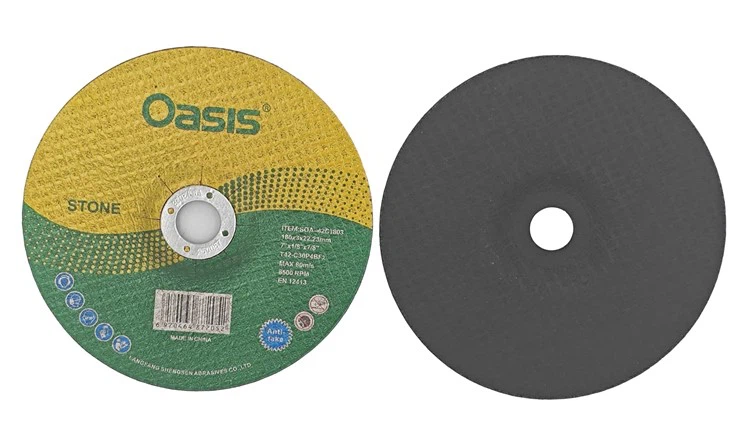
On the other hand, Alloy&stone Cutting Disc use different alloys as abrasives. These discs are more suitable for cutting softer stones or for general - purpose applications. However, the edge quality may not be as refined as that achieved with diamond cutting discs. The alloy abrasives may cause more chipping or unevenness on the cut edge, especially when dealing with harder stone types.
2. Disc Design
The design of the cutting disc also has a significant impact on edge quality. A well - designed disc will have a proper balance between the abrasive segments and the bond that holds them together. The shape and size of the segments can affect how the disc interacts with the stone. For example, a disc with larger segments may remove material more quickly but could potentially cause more chipping on the edge.
In contrast, a disc with smaller, more evenly spaced segments can provide a smoother cut and better edge quality. Additionally, the thickness of the disc can influence the edge. Thinner discs generally produce a narrower kerf (the width of the cut), which can result in a cleaner and more precise edge. However, thinner discs may also be more prone to breakage, so a careful balance must be struck.
3. Cutting Speed and Pressure
The speed at which the cutting disc rotates and the pressure applied during the cutting process are critical factors. If the cutting speed is too high, it can cause excessive heat generation, which may lead to thermal damage to the stone and a poor - quality edge. The high - speed rotation can also cause the disc to vibrate, resulting in an uneven cut.
Conversely, if the speed is too low, the disc may not cut efficiently, and the edge may become rough or jagged. Similarly, applying too much pressure can cause the disc to dig into the stone too aggressively, leading to chipping and uneven edges. On the other hand, insufficient pressure may result in a slow and ineffective cut, also affecting the edge quality.
4. Stone Type
Different types of stones have different physical properties, which can greatly affect edge quality. Harder stones, such as granite and quartzite, require more robust cutting tools and techniques to achieve a good edge. These stones are more resistant to cutting, and the cutting process may generate more heat and stress.
Softer stones, like limestone and sandstone, are generally easier to cut, but they may be more prone to chipping. The porosity of the stone can also play a role. Porous stones may absorb water or coolant during the cutting process, which can affect the cutting performance and edge quality.
Measuring Edge Quality
To assess the edge quality of a cut made with a stone cutting disc, several methods can be used. One common approach is visual inspection. A trained eye can quickly identify signs of chipping, unevenness, or roughness on the cut edge. However, visual inspection may not provide a quantitative measure of the edge quality.
Another method is to use a profilometer, which measures the surface profile of the cut edge. This device can provide detailed information about the roughness, waviness, and straightness of the edge. By analyzing the profilometer data, it is possible to determine the level of precision and smoothness of the cut.

In addition, dimensional accuracy can also be used as an indicator of edge quality. Measuring the width and straightness of the cut edge can help determine if the cut meets the required specifications. Any deviation from the desired dimensions can indicate a problem with the cutting process or the quality of the cutting disc.
Importance of Good Edge Quality
1. Aesthetic Appeal
In the construction and decorative industries, the aesthetic appeal of stone products is of utmost importance. A high - quality edge can enhance the overall look of a stone countertop, tile, or facade. A smooth and straight edge gives the impression of professionalism and precision, making the finished product more attractive to customers.
For example, in a high - end kitchen, a granite countertop with a perfectly cut edge can add a touch of luxury and sophistication. On the other hand, a countertop with a chipped or uneven edge will detract from the overall aesthetic and may even reduce the value of the property.
2. Functionality
Good edge quality is also essential for the functionality of stone products. In applications where stones are used for structural purposes, such as in building facades or load - bearing elements, a precise and smooth edge is necessary to ensure proper fit and alignment. A poorly cut edge can lead to gaps or misalignments, which can compromise the structural integrity of the building.
In tile installations, a high - quality edge is crucial for a seamless and watertight finish. Chipped or uneven edges can allow water to seep through, leading to mold growth and damage to the underlying structure.
Our Solutions for Optimal Edge Quality
As a stone cutting disc supplier, we are committed to providing products that deliver excellent edge quality. Our Diamond Cutting Disc are manufactured using the highest - quality diamonds and advanced bonding technologies. The diamonds are carefully selected for their hardness and cutting performance, ensuring a precise and smooth cut on a wide range of stone types.
Our Alloy&stone Cutting Disc are designed for general - purpose applications and offer a good balance between cost - effectiveness and edge quality. We continuously research and develop new disc designs to improve the cutting performance and edge quality. Our discs are also tested rigorously to ensure they meet the highest standards of quality and safety.
We also offer Universal Cutting Disc that are suitable for a variety of materials, including stone, metal, and ceramic. These discs are designed to provide a consistent edge quality across different applications, making them a versatile choice for contractors and DIY enthusiasts.
Conclusion
Edge quality is a crucial aspect of using stone cutting discs. It is influenced by various factors, including the abrasive material, disc design, cutting speed and pressure, and the type of stone being cut. Achieving good edge quality is essential for both the aesthetic appeal and functionality of stone products.
As a supplier, we understand the importance of providing cutting discs that can deliver optimal edge quality. Our range of Diamond Cutting Disc, Alloy&stone Cutting Disc, and Universal Cutting Disc are designed to meet the diverse needs of our customers.
If you are in the market for high - quality stone cutting discs and want to ensure the best edge quality for your projects, we invite you to contact us for more information and to discuss your specific requirements. We are here to help you make the right choice and achieve the best results in your stone - cutting applications.
References
- "Stone Cutting Technology: Principles and Applications" by John Smith
- "Advanced Abrasive Materials for Stone Cutting" by Jane Doe
- Industry reports on stone cutting disc performance and edge quality.