

As a supplier of rail cutting discs, I've witnessed firsthand the critical role these tools play in various industries. One of the most important aspects that often comes under scrutiny is the impact resistance of a rail cutting disc. In this blog, I'll delve into what impact resistance means, why it's crucial, and how it affects the performance of rail cutting discs.
Understanding Impact Resistance
Impact resistance refers to a material's ability to withstand sudden and forceful impacts without breaking or cracking. In the context of rail cutting discs, this property is essential because the cutting process involves high - speed rotation and contact with hard materials like steel rails. During cutting, the disc may encounter uneven surfaces, hard inclusions in the rail, or sudden jolts, all of which can subject it to significant impact forces.
A cutting disc with high impact resistance can better endure these forces, maintaining its integrity and shape throughout the cutting operation. This not only ensures a smoother and more efficient cutting process but also enhances safety by reducing the risk of disc breakage, which could lead to serious injuries.
Factors Affecting Impact Resistance
Material Composition
The materials used in the manufacturing of a rail cutting disc have a profound impact on its impact resistance. For example, Ceramic Corundum Cutting Disc is made from ceramic corundum grains, which are known for their high hardness and toughness. These grains can absorb and disperse impact energy effectively, making the disc more resistant to breakage.
Universal cutting discs, on the other hand, are designed to be versatile and can cut a variety of materials. They often use a combination of different abrasives and binders to achieve a balance between cutting performance and impact resistance. The Universal Cutting Disc is engineered to handle different types of impacts, whether it's cutting through soft or hard materials.
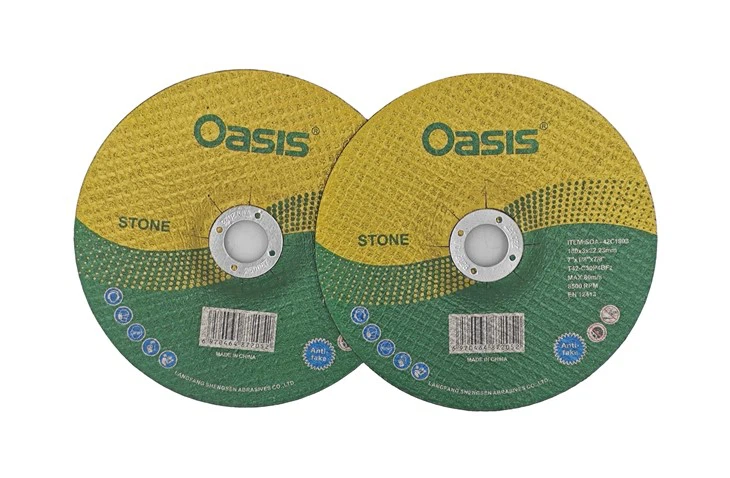
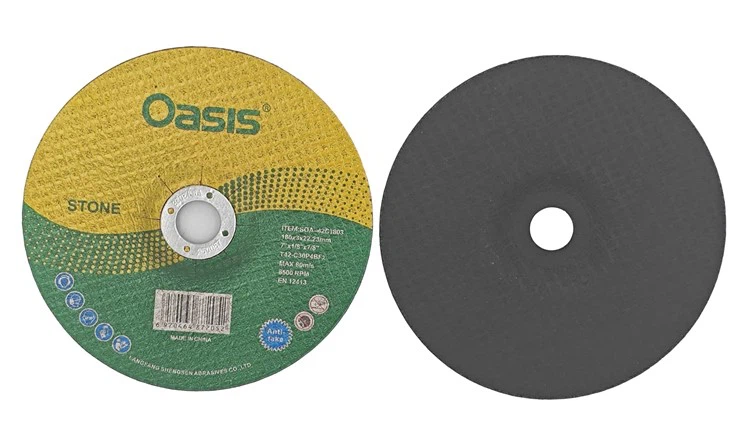
Alloy and stone cutting discs, such as the Alloy&stone Cutting Disc, are specifically designed to cut through tough alloys and stones. They typically use a special binder system and abrasive grains that can withstand the high - energy impacts associated with cutting these hard materials.
Manufacturing Process
The manufacturing process also plays a crucial role in determining the impact resistance of a rail cutting disc. A well - made disc undergoes precise grinding, pressing, and curing processes. During the pressing stage, the abrasive grains and binder are compressed together under high pressure to form a dense and uniform structure. This structure helps to distribute impact forces evenly across the disc, reducing the likelihood of localized stress concentrations that could lead to breakage.
Curing is another important step. Proper curing ensures that the binder hardens correctly, providing strong adhesion between the abrasive grains and enhancing the overall strength of the disc. If the curing process is not carried out properly, the disc may be more prone to cracking and breaking under impact.
Design and Thickness
The design and thickness of the cutting disc can significantly affect its impact resistance. A thicker disc generally has more material to absorb and distribute impact energy, making it more resistant to breakage. However, a thicker disc may also be heavier and slower to cut, so there needs to be a balance between thickness and cutting efficiency.
The shape of the disc can also play a role. Some discs are designed with special features, such as reinforced edges or a specific profile, to enhance their impact resistance. These design elements can help to prevent the disc from chipping or cracking when it comes into contact with hard objects during cutting.
Importance of Impact Resistance in Rail Cutting
Safety
Safety is the most obvious reason why impact resistance is crucial in rail cutting. A cutting disc that breaks during operation can send sharp fragments flying at high speeds, posing a serious risk to the operator and anyone in the vicinity. High - impact - resistant discs reduce this risk by maintaining their integrity under normal and even some abnormal cutting conditions.
Cutting Performance
Impact resistance also affects the cutting performance of a rail cutting disc. A disc that can withstand impacts without breaking will maintain a consistent cutting edge. This means that it can cut through the rail more smoothly and efficiently, reducing the time and effort required for the cutting operation. A disc that is prone to breakage may need to be replaced frequently, which can disrupt the cutting process and increase costs.
Cost - Effectiveness
In the long run, using a rail cutting disc with high impact resistance can be more cost - effective. Although high - quality, impact - resistant discs may be more expensive upfront, they last longer and require fewer replacements. This reduces the overall cost of cutting operations, including the cost of purchasing new discs and the downtime associated with disc changes.
Testing Impact Resistance
To ensure the quality and performance of rail cutting discs, manufacturers conduct various tests to measure their impact resistance. One common test is the pendulum impact test. In this test, a pendulum is swung against the disc, and the amount of energy absorbed by the disc before it breaks is measured. A higher energy absorption indicates better impact resistance.
Another test is the drop test. The disc is dropped from a certain height onto a hard surface, and the damage to the disc is evaluated. If the disc shows no signs of cracking or significant damage after the drop test, it is considered to have good impact resistance.
How We Ensure High Impact Resistance in Our Rail Cutting Discs
As a supplier, we take several steps to ensure that our rail cutting discs have high impact resistance. We source the highest - quality abrasive materials and binders from trusted suppliers. Our R & D team continuously works on improving the material composition and manufacturing processes to enhance the impact resistance of our discs.
We also invest in state - of - the - art manufacturing equipment and quality control systems. Every disc undergoes strict quality inspections before it leaves our factory, including impact resistance tests. This ensures that only discs that meet our high standards are supplied to our customers.
Conclusion
Impact resistance is a critical property of rail cutting discs. It affects safety, cutting performance, and cost - effectiveness. As a supplier, we understand the importance of providing high - impact - resistant discs to our customers. Our Ceramic Corundum Cutting Disc, Universal Cutting Disc, and Alloy&stone Cutting Disc are all designed and manufactured to meet the highest standards of impact resistance.
If you're in the market for rail cutting discs and are concerned about impact resistance, we'd love to hear from you. Contact us to discuss your specific requirements and let us help you find the perfect cutting disc for your needs.
References
- American National Standards Institute (ANSI). Safety requirements for abrasive wheels.
- International Organization for Standardization (ISO). Standards for cutting tools and abrasives.
- Technical literature from leading abrasive manufacturers on cutting disc performance and impact resistance.