

As a supplier of Universal Grinding Discs, I often encounter questions from customers about the maximum pressure these discs can withstand. Understanding this crucial parameter is essential for ensuring optimal performance, safety, and longevity of the grinding process. In this blog, I will delve into the factors that influence the maximum pressure of Universal Grinding Discs, explore the testing methods used to determine this limit, and provide practical insights for users.
Factors Influencing the Maximum Pressure
The maximum pressure a Universal Grinding Disc can withstand is not a fixed value but rather depends on several key factors. These factors interact in complex ways to determine the disc's overall strength and durability under pressure.
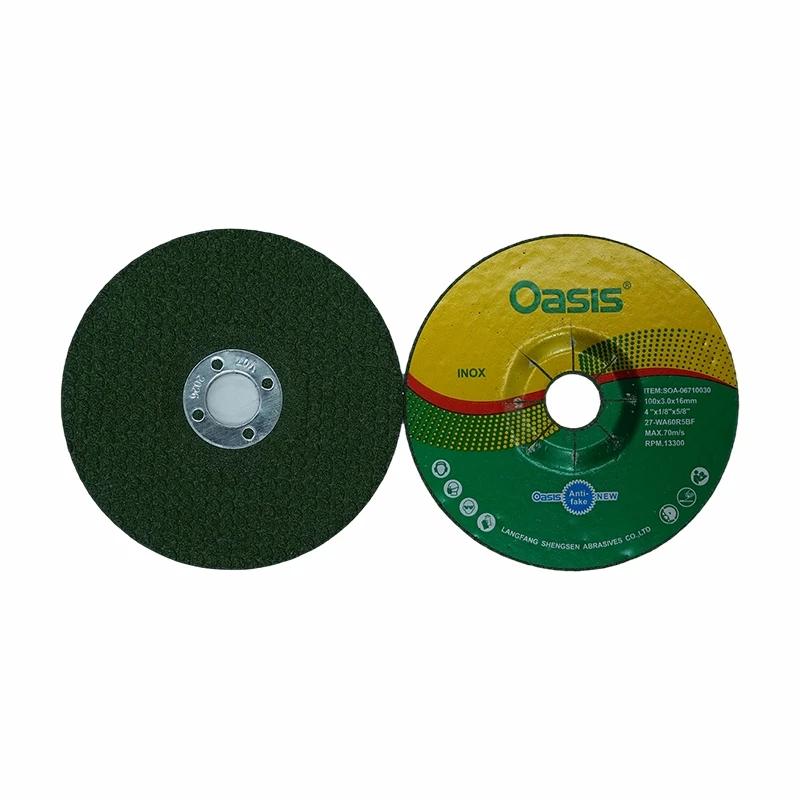

Material Composition
The material used to manufacture the grinding disc is one of the most significant factors affecting its pressure resistance. Universal Grinding Discs are typically made from a combination of abrasive grains and a bonding agent. The type and quality of these materials play a crucial role in determining the disc's strength and ability to withstand pressure.
For example, Ceramic Corundum Grinding Disc are known for their high hardness and toughness. Ceramic corundum abrasive grains have excellent wear resistance and can maintain their sharpness even under high pressure. This makes them suitable for heavy-duty grinding applications where high pressure is required.
On the other hand, discs made from softer abrasive materials may have a lower maximum pressure rating. These discs are often used for lighter grinding tasks or applications where a finer finish is required.
Bonding Agent
The bonding agent holds the abrasive grains together and provides the disc with its structural integrity. Different types of bonding agents have different properties, which can affect the disc's pressure resistance.
Resin bonds are commonly used in Universal Grinding Discs due to their good strength and flexibility. Resin-bonded discs can withstand moderate to high pressures and are suitable for a wide range of grinding applications. Vitrified bonds, on the other hand, are known for their high strength and heat resistance. Vitrified-bonded discs can withstand very high pressures and are often used in precision grinding applications.
Disc Design
The design of the grinding disc also plays a role in its pressure resistance. Factors such as the disc's thickness, diameter, and shape can affect its ability to distribute pressure evenly and withstand deformation.
Thicker discs generally have a higher maximum pressure rating than thinner discs. This is because they have more material to resist the forces applied during grinding. Larger diameter discs may also be able to withstand higher pressures, as they have a larger surface area to distribute the load.
The shape of the disc can also affect its pressure resistance. For example, Fish Scale Shaped Metal Grinding Disc are designed to provide better ventilation and heat dissipation, which can help to reduce the risk of overheating and damage to the disc under high pressure.
Operating Conditions
The operating conditions under which the grinding disc is used can also have a significant impact on its maximum pressure rating. Factors such as the grinding speed, feed rate, and coolant usage can all affect the disc's performance and durability.
Higher grinding speeds can generate more heat and friction, which can increase the pressure on the disc. This can cause the disc to wear more quickly or even break. Similarly, a high feed rate can also increase the pressure on the disc, as more material is being removed per unit of time.
Coolant usage can help to reduce the heat and friction generated during grinding, which can in turn reduce the pressure on the disc. Using a coolant can also help to extend the life of the disc and improve the quality of the grinding finish.
Testing Methods for Determining Maximum Pressure
To determine the maximum pressure that a Universal Grinding Disc can withstand, manufacturers typically use a combination of laboratory testing and field testing.
Laboratory Testing
In the laboratory, grinding discs are subjected to a series of tests to evaluate their mechanical properties and performance under different conditions. One common test is the static load test, where a disc is placed between two platens and a gradually increasing load is applied until the disc fails. The maximum load that the disc can withstand before failure is recorded as its static load capacity.
Another test is the dynamic load test, where the disc is mounted on a grinding machine and subjected to a simulated grinding process. The pressure applied to the disc during the test is gradually increased until the disc fails or shows signs of excessive wear. The maximum pressure that the disc can withstand before failure is recorded as its dynamic load capacity.
Field Testing
Field testing is also an important part of the process for determining the maximum pressure of Universal Grinding Discs. In field testing, the discs are used in real-world grinding applications to evaluate their performance and durability under actual operating conditions.
During field testing, the discs are monitored closely for signs of wear, damage, or failure. The operating conditions, such as the grinding speed, feed rate, and coolant usage, are also recorded and analyzed to determine their impact on the disc's performance.
Based on the results of laboratory testing and field testing, manufacturers can establish the maximum pressure rating for their Universal Grinding Discs. This rating is typically provided in the product specifications and should be followed by users to ensure safe and effective operation of the discs.
Practical Insights for Users
As a user of Universal Grinding Discs, it is important to understand the maximum pressure rating of the discs and to follow the manufacturer's recommendations for safe and effective operation. Here are some practical insights to help you get the most out of your grinding discs:
Choose the Right Disc for the Job
Before starting a grinding operation, it is important to choose the right Universal Grinding Disc for the job. Consider the material being ground, the required finish, and the operating conditions when selecting a disc. Make sure to choose a disc with a maximum pressure rating that is suitable for the application.
Follow the Manufacturer's Recommendations
Always follow the manufacturer's recommendations for the use of Universal Grinding Discs. This includes the recommended grinding speed, feed rate, and coolant usage. Using the discs outside of the recommended parameters can increase the risk of damage to the discs and may also affect the quality of the grinding finish.
Inspect the Discs Regularly
Regularly inspect the Universal Grinding Discs for signs of wear, damage, or failure. Look for cracks, chips, or other signs of damage on the disc surface. If you notice any damage, replace the disc immediately to avoid the risk of injury or further damage to the grinding machine.
Use the Right Grinding Machine
Make sure to use the right grinding machine for the Universal Grinding Discs. The grinding machine should be properly maintained and calibrated to ensure safe and effective operation. Using a grinding machine that is not suitable for the discs can increase the risk of damage to the discs and may also affect the quality of the grinding finish.
Conclusion
In conclusion, the maximum pressure that a Universal Grinding Disc can withstand is influenced by several factors, including the material composition, bonding agent, disc design, and operating conditions. Manufacturers use a combination of laboratory testing and field testing to determine the maximum pressure rating for their discs.
As a user of Universal Grinding Discs, it is important to understand the maximum pressure rating of the discs and to follow the manufacturer's recommendations for safe and effective operation. By choosing the right disc for the job, following the manufacturer's recommendations, inspecting the discs regularly, and using the right grinding machine, you can ensure optimal performance, safety, and longevity of your grinding process.
If you have any questions or need further information about Universal Grinding Discs, please feel free to contact us for more details. We are always happy to help you find the right grinding solution for your needs.
References
- "Grinding Technology: Theory and Applications of Machining with Abrasives" by Brian R. Marrow
- "Handbook of Abrasive Technology" by Robert L. King
- Manufacturer's product specifications and technical documentation for Universal Grinding Discs