

Hey there! As a supplier of wool felt wheels, I often get asked about the moisture resistance of these nifty items. So, let's dive right in and chat about what the moisture resistance of a wool felt wheel really means.
First off, let's understand what a wool felt wheel is. It's a type of wheel made from wool fibers that are compressed and felted together. These wheels are super versatile and are used in a bunch of different industries, like metalworking, woodworking, and even jewelry making. You can check out our Machinery Wool Felt Wheel for some great examples of how they're used in machinery.
Now, onto the big question: moisture resistance. Wool, as a natural fiber, has some unique properties when it comes to dealing with moisture. Unlike some synthetic materials that either absorb water like a sponge or repel it completely, wool has a bit of a middle - ground approach.
Wool can actually absorb a significant amount of moisture without feeling wet. It can hold up to about 30% of its own weight in water before it starts to feel damp. This is because the wool fibers have tiny scales on their surface and a complex internal structure. These scales and the structure allow the wool to trap water molecules within the fiber itself.
When it comes to a wool felt wheel, this moisture - absorbing property can be both a blessing and a curse. On the plus side, in certain applications where a bit of moisture is present, like in some wet - polishing processes, the wool felt wheel can handle the moisture without falling apart or losing its shape. It can continue to do its job effectively, whether it's buffing, polishing, or cleaning. Our Pure Wool Polishing Pad is a great example of a product that can handle some moisture during polishing tasks.

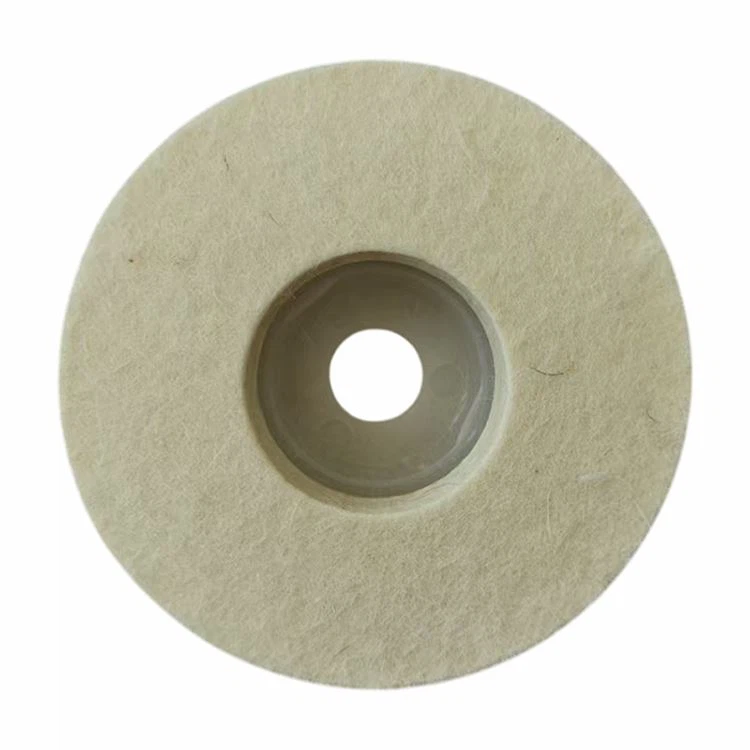
However, there are also some downsides. If the wool felt wheel is exposed to excessive moisture for a long time, it can start to develop problems. For instance, the high moisture content can lead to the growth of mold and mildew. Mold and mildew not only look bad but can also weaken the structure of the felt wheel over time. They can cause the fibers to break down, reducing the wheel's effectiveness and lifespan.
Another issue is that if the wool felt wheel gets too wet, it can become heavy and lose its flexibility. This can affect its performance, especially in applications where a light touch and flexibility are crucial. For example, in precision jewelry polishing, a heavy and inflexible wheel might not be able to reach all the nooks and crannies of a delicate piece.
So, how can we manage the moisture resistance of a wool felt wheel? Well, one of the most important things is proper storage. When the wheel is not in use, it should be stored in a dry place. If it does get wet during use, it should be dried thoroughly as soon as possible. You can let it air - dry in a well - ventilated area, but make sure it's not exposed to direct sunlight for too long, as this can also damage the wool fibers.
In some cases, you might want to treat the wool felt wheel with a water - repellent coating. There are various products available on the market that can help make the wheel more resistant to moisture. However, you need to be careful when choosing a coating, as some might affect the wheel's performance or the finish it provides.
Let's talk a bit more about the different types of wool used in felt wheels and how they can impact moisture resistance. There are different grades of wool, and each has its own characteristics. For example, fine - grade wool might have a different moisture - handling ability compared to coarser wool. Fine - grade wool often has more tightly packed fibers, which can potentially hold more moisture but also dry out more slowly. Coarser wool, on the other hand, might have larger gaps between the fibers, allowing for quicker evaporation of moisture but also potentially absorbing less overall.
Our Premium Wool Polishing Wheel is made from high - quality wool that has been carefully selected to balance moisture resistance with other important properties like durability and polishing performance.
In industrial settings, the moisture resistance of a wool felt wheel can have a big impact on productivity. If a wheel has poor moisture resistance, it might need to be replaced more frequently, which can be costly and time - consuming. On the other hand, a well - designed and properly maintained wool felt wheel with good moisture resistance can save a lot of money and keep the production process running smoothly.
For small - scale users, like hobbyists or DIYers, understanding the moisture resistance of a wool felt wheel is also important. It can help them get the most out of their tools and ensure that their projects turn out great. Whether you're working on a small metal sculpture or a wooden box, having a wheel that can handle the moisture in the environment is key.
In conclusion, the moisture resistance of a wool felt wheel is a complex but important aspect to consider. It has both advantages and disadvantages, and how you manage it can greatly affect the performance and lifespan of the wheel. If you're in the market for a wool felt wheel, make sure to take the time to understand its moisture - handling capabilities and how to care for it properly.
If you're interested in purchasing our high - quality wool felt wheels, we'd love to have a chat with you. Whether you're a large - scale industrial user or a small - time hobbyist, we've got the right product for you. Just reach out to us to start the purchasing and negotiation process. We're here to help you find the perfect wool felt wheel for your needs.
References
- Textile Institute. "Properties of Wool Fibers." A comprehensive study on the natural properties of wool.
- Industrial Polishing Handbook. "Use and Care of Felt Wheels." A guide for industrial users on the practical aspects of using felt wheels.