

Hey there! As a supplier of Ceramic Straight Wheels, I often get asked about the specific grinding energy of these wheels. So, I thought I'd take a few minutes to break it down for you.
First off, let's talk about what specific grinding energy actually means. In simple terms, it's the amount of energy required to remove a unit volume of material during the grinding process. It's a crucial factor to consider because it can have a big impact on the efficiency, cost, and quality of your grinding operations.
When it comes to Ceramic Straight Wheels, the specific grinding energy is influenced by several key factors. One of the most important is the abrasive grain type. Ceramic abrasives are known for their high hardness and self - sharpening properties. This means that they can cut through materials more effectively and require less energy to remove the same amount of material compared to some other abrasive types. For example, ceramic abrasives can maintain their cutting edges for longer periods, reducing the need for excessive force during grinding.
The bond type also plays a significant role. The bond holds the abrasive grains together in the wheel. Different bond materials have different levels of strength and flexibility. A well - chosen bond for Ceramic Straight Wheels can ensure that the abrasive grains are held in place firmly enough to perform the grinding action but also allow them to break away at the right time when they become dull. This balance helps to optimize the specific grinding energy.
The grinding parameters, such as the grinding speed, feed rate, and depth of cut, are also essential. If you set the grinding speed too low, you might end up using more energy because the wheel isn't cutting efficiently. On the other hand, if the speed is too high, it could lead to excessive heat generation and premature wear of the wheel. Similarly, the feed rate and depth of cut need to be adjusted properly. A higher feed rate might seem like it would increase productivity, but if it's too high, it can increase the specific grinding energy and cause poor surface finish.
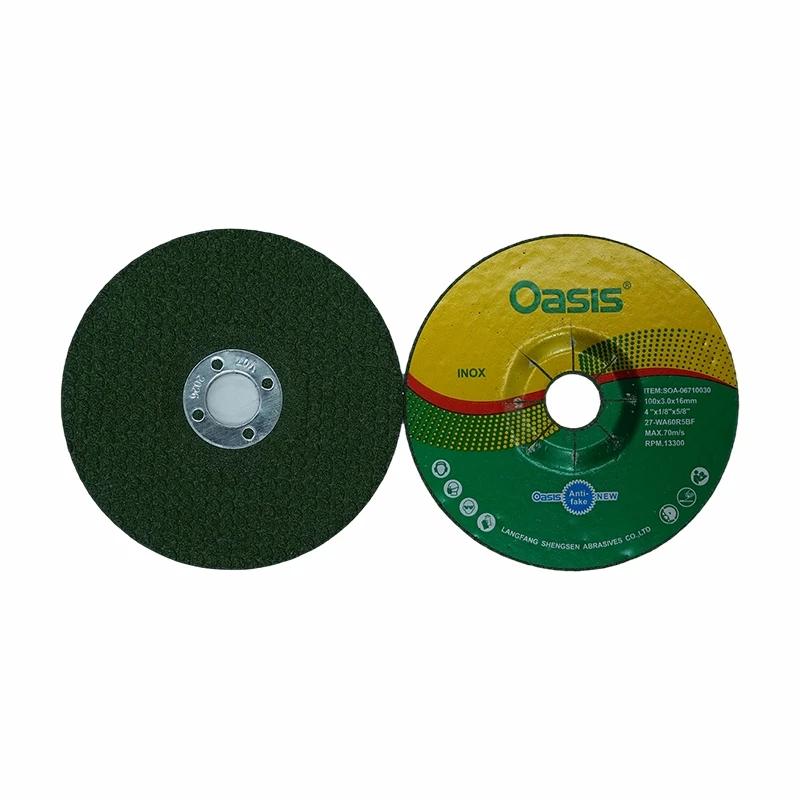
Now, let's take a look at how the specific grinding energy of Ceramic Straight Wheels compares to other types of grinding discs. For instance, the Ceramic Corundum Grinding Disc has its own characteristics. While both use ceramic - based abrasives, the shape and design of the Ceramic Straight Wheels make them more suitable for certain applications, like surface grinding and cylindrical grinding. The specific grinding energy might be different depending on the application. In some cases, the straight - wheel design allows for a more consistent and controlled grinding process, which can result in lower specific grinding energy.
Another type is the Fish Scale Shaped Metal Grinding Disc. These discs are designed for different purposes, mainly for grinding metal surfaces with a unique fish - scale pattern. The specific grinding energy of these discs can vary based on the metal being ground and the grinding conditions. Compared to Ceramic Straight Wheels, they might have a different energy requirement due to their different shape and the way they interact with the workpiece.
In practical applications, understanding the specific grinding energy of Ceramic Straight Wheels can help you save costs. By optimizing the grinding parameters and choosing the right wheel for the job, you can reduce the amount of energy consumed. This not only saves on electricity bills but also extends the life of the wheel. For example, if you're grinding a hard - to - machine material, using a Ceramic Straight Wheel with the appropriate abrasive and bond can reduce the specific grinding energy and improve the overall efficiency of the process.
Moreover, a lower specific grinding energy can also lead to a better surface finish. When the wheel doesn't have to use excessive force to remove material, there's less chance of creating surface defects or heat - affected zones on the workpiece. This is especially important in industries where high - precision and high - quality surface finishes are required, such as aerospace and automotive manufacturing.
If you're in the market for high - quality Ceramic Straight Wheels, you'll want to consider the specific grinding energy as one of the key factors. Our company offers a wide range of Ceramic Straight Wheels that are designed to optimize this energy consumption. We have different abrasive grain sizes, bond types, and wheel dimensions to meet your specific needs.
Whether you're a small - scale workshop or a large - scale manufacturing plant, our Ceramic Straight Wheels can provide you with the performance and efficiency you're looking for. We understand that every grinding application is unique, and we're here to help you choose the right wheel for your job.
If you're interested in learning more about our Ceramic Straight Wheels or have any questions about specific grinding energy, don't hesitate to get in touch. We'd be more than happy to discuss your requirements and provide you with the best solutions. You can start a conversation with us to explore how our products can improve your grinding operations and save you money in the long run.

In conclusion, the specific grinding energy of Ceramic Straight Wheels is a complex but important concept. By understanding the factors that influence it and how it compares to other grinding discs, you can make more informed decisions when it comes to your grinding processes. So, if you're ready to take your grinding operations to the next level, reach out to us and let's start the conversation about how our Ceramic Straight Wheels can work for you.
References
- Malkin, S., & Guo, C. (2008). Grinding technology: theory and applications of machining with abrasives. John Wiley & Sons.
- Shaw, M. C. (2005). Metal cutting principles. Oxford University Press.