

Hey there! As a supplier of Diamond Cutting Discs, I often get asked, "What speed should I use when cutting with a diamond cutting disc?" It's a crucial question, and the answer can significantly impact the efficiency and quality of your cutting work. So, let's dive right in and explore this topic in detail.
First off, it's important to understand that the speed at which you should cut with a diamond cutting disc depends on several factors. These include the type of material you're cutting, the size of the disc, and the specific design and quality of the disc itself.
Let's start with the type of material. Different materials have different hardness and density, which means they require different cutting speeds. For instance, if you're cutting through soft materials like wood or plastic, you can generally use a higher cutting speed. These materials are easier to cut, and a higher speed can help you get the job done more quickly. On the other hand, when cutting hard materials such as concrete, granite, or metal, you'll need to use a lower speed. Hard materials are more resistant to cutting, and a high speed can cause the disc to overheat, wear out quickly, or even break.
The size of the diamond cutting disc also plays a role in determining the appropriate cutting speed. Larger discs typically require a lower speed compared to smaller ones. This is because larger discs have a greater circumference, and at high speeds, the outer edge of the disc can experience excessive stress, leading to potential damage. So, if you're using a big disc, make sure to slow down a bit.
Now, let's talk about the specific design and quality of the diamond cutting disc. At our company, we offer a range of Diamond Cutting Disc that are designed for different applications. Our discs are made with high-quality diamonds and advanced manufacturing techniques, which means they can handle different cutting speeds more effectively. For example, our Universal Cutting Disc is suitable for a variety of materials and can be used at a moderate speed for most general cutting tasks. On the other hand, our Alloy&stone Cutting Disc is specifically designed for cutting alloy and stone materials and may require a different speed depending on the hardness of the material.

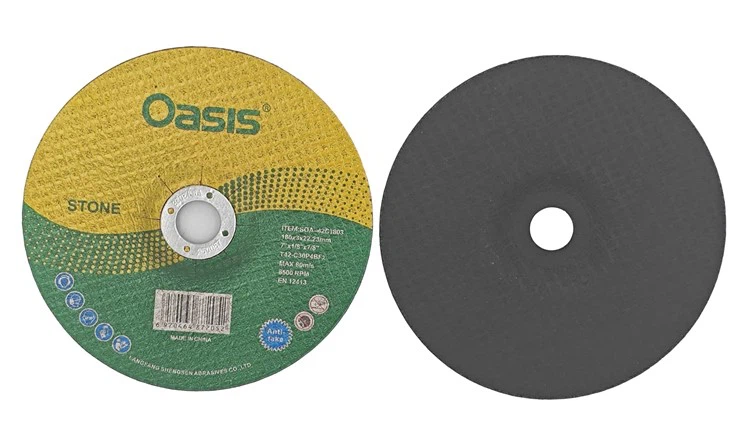
So, how do you determine the exact speed for your cutting job? Well, most diamond cutting discs come with a recommended speed range printed on the packaging. This is a good starting point, but you may need to adjust the speed based on your actual cutting experience. It's also a good idea to do a test cut on a small piece of the material to see how the disc performs at different speeds.
Here are some general guidelines to help you choose the right speed:
- Soft materials (wood, plastic): You can usually use a speed of around 3000 - 5000 RPM (revolutions per minute). This allows for a fast and clean cut.
- Medium-hard materials (brick, tile): Aim for a speed of 2000 - 3000 RPM. This helps to prevent the disc from overheating and ensures a smooth cut.
- Hard materials (concrete, granite, metal): Keep the speed between 1000 - 2000 RPM. This gives the disc enough time to cut through the material without causing excessive wear or damage.
Remember, safety should always be your top priority when using a diamond cutting disc. Make sure to wear appropriate safety gear, such as goggles, gloves, and a dust mask. Also, follow the manufacturer's instructions for using the disc and the cutting equipment.
In addition to choosing the right speed, there are a few other things you can do to ensure a successful cutting job. For example, make sure the cutting surface is clean and free of debris. This helps to prevent the disc from getting clogged and improves the cutting performance. You should also apply a consistent and moderate pressure when cutting. Too much pressure can cause the disc to overheat and wear out quickly, while too little pressure may result in an uneven cut.
Another important factor is the cooling of the disc. When cutting hard materials, the disc can generate a lot of heat. To prevent overheating, you can use a coolant or water to keep the disc cool. This not only extends the life of the disc but also improves the cutting quality.
In conclusion, choosing the right speed when cutting with a diamond cutting disc is essential for achieving the best results. By considering the type of material, the size of the disc, and the specific design and quality of the disc, you can determine the appropriate speed for your cutting job. And if you have any questions or need further advice, don't hesitate to reach out to us. We're here to help you make the most of our Diamond Cutting Disc and ensure your cutting projects are a success.
If you're in the market for high-quality diamond cutting discs, we'd love to have a chat with you. Whether you're a professional contractor or a DIY enthusiast, we have the right disc for your needs. Just get in touch with us, and we can discuss your requirements and provide you with the best solutions. Let's work together to make your cutting tasks easier and more efficient!
References
- Various industry standards and guidelines on diamond cutting disc usage
- Manufacturer's specifications and recommendations for diamond cutting discs