

As a supplier of flap discs, I often encounter questions from customers regarding the versatility and application scope of our products. One of the most frequently asked questions is whether a flap disc can be used for contour grinding. In this blog post, I will delve into this topic, exploring the capabilities of flap discs in contour grinding, their advantages, limitations, and the factors to consider when using them for this purpose.
Understanding Flap Discs
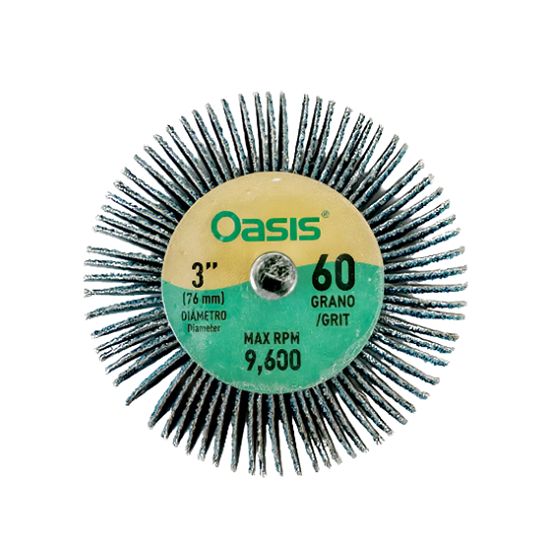
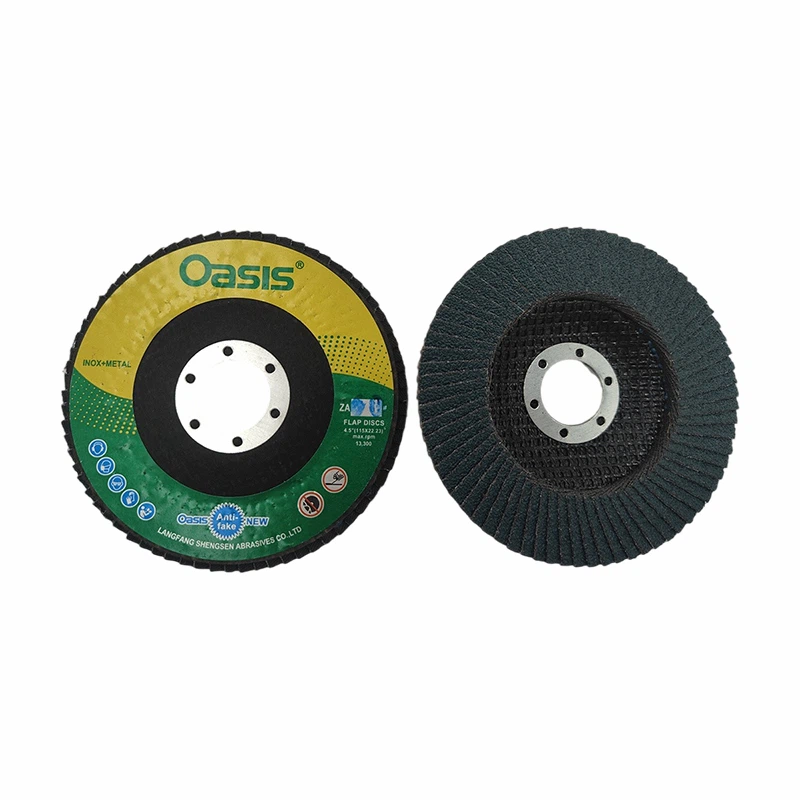
Before we discuss contour grinding, let's first understand what flap discs are. A flap disc is a type of abrasive tool composed of multiple overlapping abrasive flaps attached to a backing plate. These flaps are typically made of abrasive grains such as aluminum oxide, zirconia alumina, or ceramic alumina, which are bonded to a flexible backing material. Flap discs are commonly used for grinding, blending, and finishing applications on various materials, including metal, stainless steel, and non-ferrous metals.
Flap discs come in different shapes, sizes, and grits to suit different applications. The most common shapes are flat and conical, with flat flap discs being more suitable for flat or slightly curved surfaces, while conical flap discs are better for contouring and hard-to-reach areas. The grit size of a flap disc determines the coarseness or fineness of the abrasive, with lower grit numbers indicating a coarser abrasive and higher grit numbers indicating a finer abrasive.
Contour Grinding: What is it?
Contour grinding is a precision grinding process used to create complex shapes and contours on a workpiece. It involves the use of a grinding wheel or abrasive tool to remove material from the workpiece in a controlled manner, following a pre-defined path or contour. Contour grinding is commonly used in industries such as automotive, aerospace, and tool and die manufacturing to produce parts with intricate shapes and precise dimensions.
Contour grinding can be performed using various types of grinding wheels, including cylindrical, spherical, and form wheels. Each type of wheel is designed to produce a specific type of contour, and the choice of wheel depends on the shape and complexity of the workpiece, as well as the desired surface finish.
Can a Flap Disc be Used for Contour Grinding?
The short answer is yes, a flap disc can be used for contour grinding, but with some limitations. Flap discs are primarily designed for general-purpose grinding and finishing applications, and while they can be used to create simple contours, they may not be the best choice for complex or precise contour grinding.
One of the main advantages of using a flap disc for contour grinding is its flexibility. The overlapping abrasive flaps on a flap disc can conform to the shape of the workpiece, allowing for a more even distribution of the abrasive and a smoother finish. This makes flap discs particularly suitable for contouring on curved or irregular surfaces, where a rigid grinding wheel may not be able to follow the contour accurately.
Another advantage of using a flap disc for contour grinding is its ability to remove material quickly. Flap discs have a large surface area of abrasive, which allows them to remove material at a faster rate than some other types of abrasive tools. This can be beneficial when working on large or thick workpieces, where time is of the essence.
However, there are also some limitations to using a flap disc for contour grinding. One of the main limitations is the lack of precision. Flap discs are not as precise as some other types of grinding wheels, and they may not be able to produce the same level of accuracy and detail as a form wheel or a CNC grinding machine. This makes flap discs less suitable for contour grinding applications where precise dimensions and tight tolerances are required.
Another limitation of using a flap disc for contour grinding is the risk of overheating. Flap discs generate a significant amount of heat during grinding, which can cause the workpiece to warp or distort if not properly managed. This can be a particular problem when working on thin or delicate workpieces, where the heat generated by the flap disc can cause the material to melt or burn.
Factors to Consider When Using a Flap Disc for Contour Grinding
If you decide to use a flap disc for contour grinding, there are several factors you should consider to ensure the best results. These factors include:
Workpiece Material
The type of material you are grinding will have a significant impact on the performance of the flap disc. Different materials have different hardness, toughness, and abrasion resistance, which can affect the rate of material removal, the surface finish, and the wear rate of the flap disc. For example, grinding stainless steel requires a different type of flap disc than grinding mild steel, as stainless steel is harder and more difficult to grind.
Contour Complexity
The complexity of the contour you are trying to create will also affect the suitability of a flap disc for the job. Simple contours, such as rounded edges or shallow curves, can be easily achieved using a flap disc, while complex contours, such as sharp corners or intricate shapes, may require a more precise grinding tool.
Surface Finish
The desired surface finish is another important factor to consider when using a flap disc for contour grinding. Flap discs can produce a smooth and even finish, but the quality of the finish will depend on the grit size of the flap disc and the grinding technique used. For a finer surface finish, a higher grit flap disc should be used, and the grinding should be done at a slower speed and with light pressure.
Grinding Speed and Pressure
The speed and pressure at which you grind will also affect the performance of the flap disc and the quality of the finish. Grinding too fast or with too much pressure can cause the flap disc to wear out quickly, overheat the workpiece, and produce a rough or uneven finish. On the other hand, grinding too slowly or with too little pressure can result in inefficient material removal and a poor surface finish.
Cooling and Lubrication
As mentioned earlier, flap discs generate a significant amount of heat during grinding, which can cause the workpiece to warp or distort if not properly managed. To prevent overheating, it is important to use a coolant or lubricant during grinding. Coolants and lubricants help to reduce the temperature of the workpiece and the flap disc, improve the surface finish, and extend the life of the flap disc.
Choosing the Right Flap Disc for Contour Grinding
When choosing a flap disc for contour grinding, there are several factors you should consider, including the shape, size, grit size, and abrasive type of the flap disc.
Shape
As mentioned earlier, flap discs come in different shapes, including flat and conical. For contour grinding, a conical flap disc is generally preferred, as it can better conform to the shape of the workpiece and reach into hard-to-reach areas.
Size
The size of the flap disc you choose will depend on the size and shape of the workpiece, as well as the type of grinding machine you are using. A larger flap disc will cover more surface area and remove material more quickly, but it may not be suitable for small or intricate workpieces. A smaller flap disc, on the other hand, will provide more control and precision, but it may take longer to remove material.
Grit Size
The grit size of the flap disc you choose will depend on the desired surface finish and the amount of material you need to remove. For rough grinding and material removal, a lower grit flap disc (e.g., 36 or 40 grit) should be used, while for finishing and polishing, a higher grit flap disc (e.g., 80 or 120 grit) should be used.
Abrasive Type
The abrasive type of the flap disc you choose will depend on the material you are grinding. Different abrasive types have different properties and are suitable for different materials. For example, aluminum oxide is a common abrasive type used for general-purpose grinding on mild steel and other ferrous metals, while zirconia alumina is a more aggressive abrasive type used for high-speed grinding on harder materials such as stainless steel and titanium.
Conclusion
In conclusion, a flap disc can be used for contour grinding, but with some limitations. Flap discs are a versatile and flexible abrasive tool that can be used to create simple contours on a workpiece, but they may not be the best choice for complex or precise contour grinding. When using a flap disc for contour grinding, it is important to consider the factors discussed in this blog post, such as the workpiece material, contour complexity, surface finish, grinding speed and pressure, and cooling and lubrication, to ensure the best results.
If you are interested in using a flap disc for contour grinding, or if you have any questions about our flap disc products, please feel free to [contact us for procurement and negotiation]. We are a leading supplier of flap discs, offering a wide range of products, including the Universal Flap Disc and the Shaft-mounted Flap Wheel. Our products are designed to meet the highest quality standards and are suitable for a variety of applications, including contour grinding.
References
- "Grinding Handbook," Kalpakjian, S., & Schmid, S. R. (2010). Manufacturing Engineering and Technology. Pearson.
- "Abrasive Machining Technology," Byrne, G., et al. (2003). CIRP Annals - Manufacturing Technology, 52(2), 601-624.
- "Contour Grinding: Principles and Applications," Tooling U-SME. (n.d.). Retrieved from https://www.toolingu.com/