

Hey there! As a velcro disc supplier, I often get asked all sorts of questions about the uses of our products. One question that pops up quite a bit is, "Can a velcro disc be used for sanding brass?" Well, let's dive right into it and find out.
First off, let's talk a bit about what velcro discs are. A velcro disc, also known as a Hook and Loop Fastener Sanding Disc Hook and Loop Fastener Sanding Disc, is a type of sanding disc that uses a hook - and - loop system to attach to a sander. This makes it super easy to swap out discs when they wear out or when you need a different grit.
Now, brass is a metal alloy made up of copper and zinc. It's a popular material in many industries, from plumbing to jewelry - making, because of its attractive appearance, corrosion resistance, and workability. But when it comes to sanding brass, there are a few things to consider.
Advantages of Using Velcro Discs for Sanding Brass
1. Easy Disc Changes
One of the biggest advantages of using velcro discs for sanding brass is the ease of disc changes. When you're sanding brass, you might need to switch between different grits to achieve the desired finish. Maybe you start with a coarse grit to remove any rough edges or surface imperfections, and then move on to a finer grit for a smooth, polished look. With a velcro disc, you can make these changes quickly and easily, without having to deal with complicated mounting systems.
2. Wide Range of Grits Available
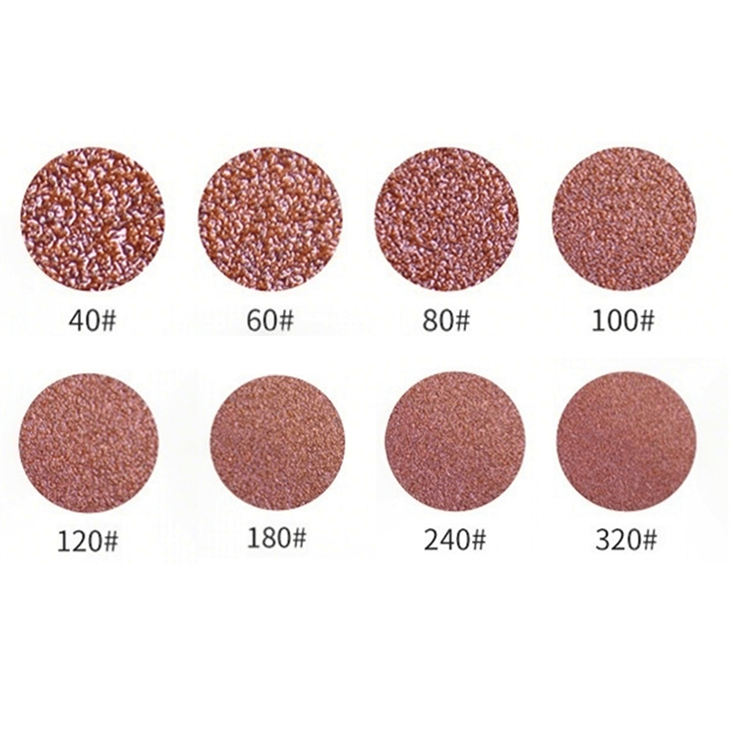
Velcro discs come in a wide range of grits, from very coarse to extremely fine. This is great for sanding brass because different brass projects may require different levels of abrasion. For example, if you're working on a large brass pipe that has a lot of rust or scale on it, you'll probably want to start with a coarse - grit disc, like 40 or 60 grit, to quickly remove the unwanted material. On the other hand, if you're sanding a small brass jewelry piece, you'll likely need a much finer grit, like 220 or 320, to get a smooth, shiny finish.
3. Good for Different Sander Types
Velcro discs are compatible with many different types of sanders, including orbital sanders, belt sanders, and random - orbital sanders. This means that no matter what type of sander you have, you can probably use a velcro disc to sand your brass. Whether you're a professional metalworker with a high - end industrial sander or a DIY enthusiast using a handheld orbital sander, velcro discs can be a great option.
Considerations When Using Velcro Discs for Sanding Brass
1. Heat Generation
When sanding brass, heat can be a bit of an issue. Brass is a relatively soft metal, and excessive heat can cause it to warp or change its properties. Velcro discs, especially when used at high speeds or with a lot of pressure, can generate heat. To avoid this, it's important to use the right grit for the job and to sand in short, controlled bursts. You may also want to use a lubricant or coolant to help dissipate the heat.
2. Contamination
Another thing to keep in mind is contamination. Brass is a valuable metal, and you don't want to contaminate it with particles from the sanding disc. Some sanding discs may contain materials that can react with brass or leave behind unwanted residues. Make sure to choose a high - quality velcro disc that is designed for metal sanding to minimize the risk of contamination.

3. Dust Collection
Sanding brass creates a lot of dust, which can be a health hazard if inhaled. When using a velcro disc to sand brass, it's important to have a good dust collection system in place. Many sanders come with built - in dust collection ports, or you can use a separate dust collector. This will help keep your work area clean and protect your health.
Tips for Sanding Brass with Velcro Discs
1. Start with a Test Piece
Before you start sanding your main brass project, it's a good idea to test the velcro disc on a small, scrap piece of brass. This will allow you to see how the disc performs and to adjust your sanding technique if needed. You can also experiment with different grits to find the one that works best for your project.
2. Use the Right Pressure
When sanding brass with a velcro disc, it's important to use the right amount of pressure. Too much pressure can cause the disc to wear out quickly and can also generate excessive heat. On the other hand, too little pressure may not be effective in removing the material. Start with a light pressure and gradually increase it as needed.
3. Sand in the Right Direction
To get a smooth, even finish, it's important to sand in the right direction. For most brass projects, it's best to sand in a linear or circular motion, depending on the shape of the piece. Avoid sanding in random directions, as this can create an uneven surface.
Conclusion
So, can a velcro disc be used for sanding brass? Absolutely! Velcro discs offer many advantages for sanding brass, including easy disc changes, a wide range of grits, and compatibility with different sander types. However, there are also some considerations to keep in mind, such as heat generation, contamination, and dust collection. By following the tips I've shared, you can use a velcro disc to sand brass effectively and achieve great results.
If you're interested in purchasing velcro discs for your brass - sanding projects, I'd love to talk to you about our products. We offer a wide selection of high - quality velcro discs in various grits and sizes. Whether you're a professional or a DIYer, we have the right disc for your needs. Reach out to us to start a conversation about your requirements and let's find the perfect velcro disc solution for you.
References
- "Metalworking Handbook" - A comprehensive guide on metalworking techniques, including sanding of different metals.
- "Brass: Properties and Applications" - A publication that details the characteristics of brass and how it responds to different machining processes.