

Hey there! As a supplier of velcro discs, I often get asked a bunch of questions about these nifty little tools. One question that pops up quite a bit is, "Do velcro discs generate heat during use?" Well, let's dive right into it and find out.
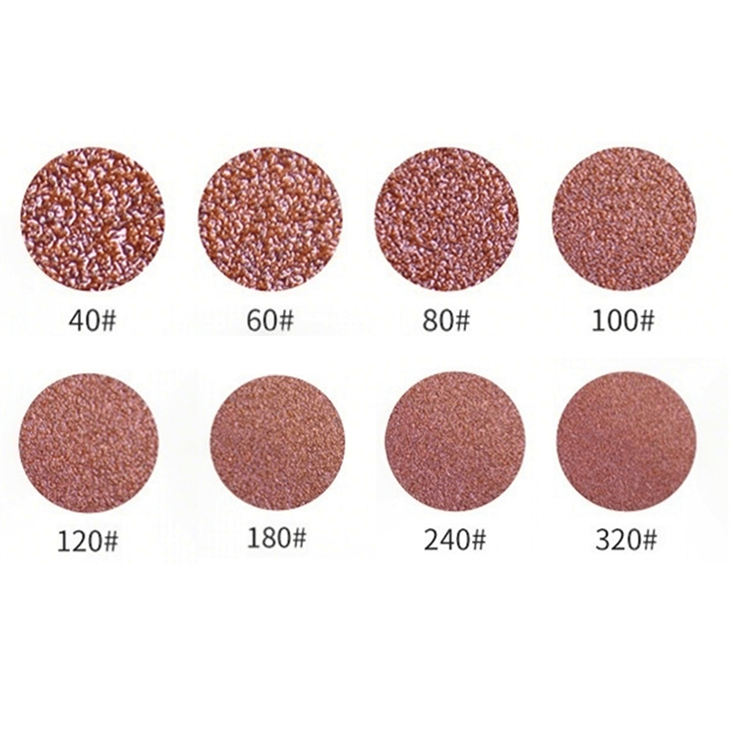

First off, let's talk a bit about what velcro discs are. Velcro discs, also known as Hook and Loop Fastener Sanding Disc, are sanding discs that use a hook - and - loop system to attach to a sander. This makes them super easy to change out, which is a huge plus for anyone doing sanding work. They come in various grits, from coarse to fine, and are used for different sanding tasks, like smoothing wood, metal, or plastic surfaces.
Now, onto the heat question. The short answer is yes, velcro discs can generate heat during use. But to understand why, we need to look at the science behind sanding. When you're sanding a surface, the abrasive particles on the velcro disc are rubbing against the material. This friction is what does the sanding job, but it also creates heat.
Think about it like this: when you rub your hands together really fast, they start to get warm. That's friction at work. The same principle applies to velcro discs. As the disc spins and the abrasive grits scrape against the surface, energy is converted from mechanical to thermal energy, which means heat is produced.
The amount of heat generated depends on several factors. One of the main factors is the speed of the sander. If you're using a high - speed sander, the disc will be moving faster, and there will be more friction between the disc and the material. This results in more heat being produced. For example, a random - orbit sander running at a high RPM (revolutions per minute) will generate more heat than one running at a lower RPM.
Another factor is the type of material you're sanding. Some materials are more resistant to sanding than others. For instance, sanding a hard metal like stainless steel will generate more heat than sanding a softwood like pine. The harder the material, the more force the abrasive has to apply to remove the material, and this increased force leads to more friction and heat.
The grit of the velcro disc also plays a role. Coarse - grit discs have larger abrasive particles. These particles remove material more quickly but also create more friction. Fine - grit discs, on the other hand, have smaller particles and remove material more slowly, resulting in less heat generation. So, if you're working on a project where heat is a concern, you might want to start with a coarse - grit disc for the initial sanding and then switch to a fine - grit disc for the finishing touches.
Now, you might be wondering, is this heat a problem? Well, it can be. Excessive heat can cause several issues. For one, it can damage the material you're sanding. In the case of wood, too much heat can cause the wood to char or burn, leaving unsightly marks. With metal, heat can cause warping or change the material's properties.
Heat can also affect the velcro disc itself. High temperatures can cause the adhesive on the disc to break down, which means the disc might not stick properly to the sander. It can also wear out the abrasive particles more quickly, reducing the disc's lifespan.
So, what can you do to manage the heat? One simple solution is to take breaks. If you're sanding for a long time, stop every now and then to let the disc and the material cool down. This will prevent the build - up of excessive heat.
You can also adjust the speed of your sander. If you notice that the disc is getting too hot, try reducing the RPM. This will decrease the friction and, in turn, the amount of heat generated.
Using a lubricant can also help. Some sanding operations use a lubricant to reduce friction. For example, when sanding metal, a coolant can be applied to the surface to keep the temperature down.
As a velcro disc supplier, I've seen firsthand the importance of understanding how these discs work and how to use them effectively. We offer a wide range of velcro discs, each designed to meet different sanding needs. Whether you're a professional woodworker, a metal fabricator, or a DIY enthusiast, we've got the right disc for you.
If you're looking for high - quality velcro discs that can handle your sanding projects without generating excessive heat, we're here to help. Our discs are made with the latest technology and high - quality materials to ensure optimal performance.
If you're interested in learning more about our velcro discs or have any questions about heat generation or sanding in general, don't hesitate to reach out. We're always happy to have a chat and help you find the best solution for your sanding needs. Whether it's choosing the right grit, understanding how to use your sander efficiently, or managing heat, we've got the expertise to guide you.
In conclusion, while velcro discs do generate heat during use, with the right knowledge and techniques, you can manage this heat and ensure a successful sanding project. So, if you're in the market for some top - notch velcro discs, give us a shout. We're ready to assist you in making your sanding tasks easier and more efficient.
References
- "Sanding Techniques and Heat Generation", Woodworking Journal, Vol. 15, Issue 3
- "The Science of Abrasive Materials", Metal Fabrication Magazine, Vol. 22, Issue 5
- "Understanding Hook - and - Loop Fasteners in Sanding Applications", Industrial Tools Review, Vol. 9, Issue 2