

In the realm of metalworking, construction, and various industrial applications, the Universal Flap Disc stands out as an indispensable tool. As a trusted Universal Flap Disc supplier, I've witnessed firsthand the profound impact that different operational factors can have on its performance. One such critical factor is the angle at which the grinder is held while using the Universal Flap Disc. In this blog, I'll delve into how this angle affects the performance of the disc, offering insights based on industry knowledge and practical experience.
Understanding the Universal Flap Disc
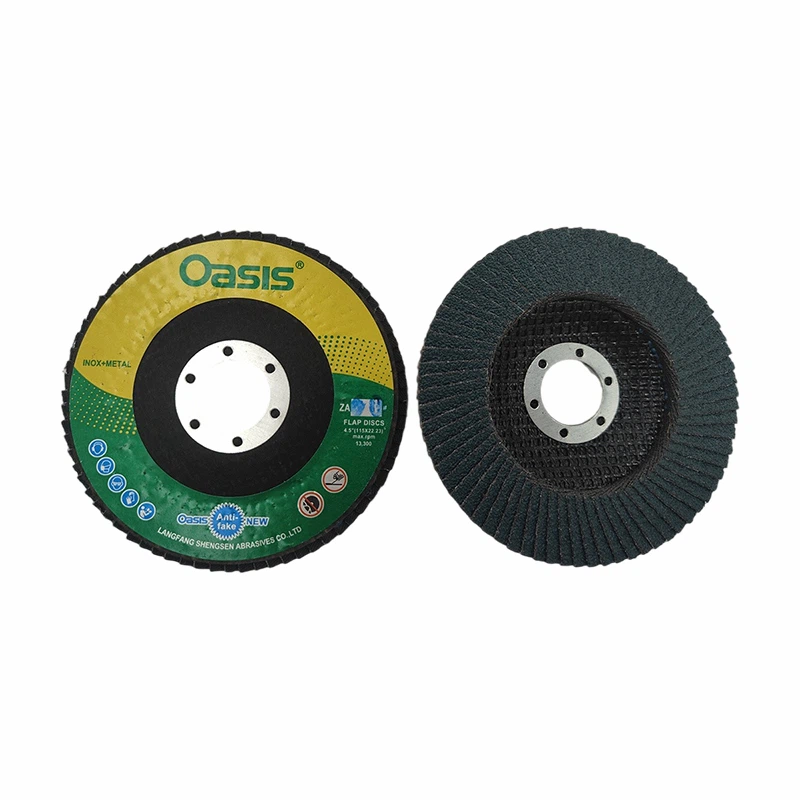
Before we explore the influence of the grinder angle, let's briefly understand what a Universal Flap Disc is. A Universal Flap Disc consists of multiple overlapping abrasive flaps mounted on a backing plate. These flaps are typically made from materials like aluminum oxide or zirconia alumina, which provide excellent cutting and grinding capabilities. The design of the flaps allows for self - sharpening as they wear, ensuring consistent performance over time. This type of disc is versatile, suitable for both grinding and finishing operations on a variety of materials, including metal, stainless steel, and non - ferrous metals.

The Role of Grinder Angle in Cutting Efficiency
The angle at which the grinder is held relative to the workpiece significantly affects the cutting efficiency of the Universal Flap Disc. When the grinder is held at a shallow angle, usually between 10 to 15 degrees, the disc makes a larger contact area with the workpiece. This larger contact area distributes the pressure over a broader surface, reducing the cutting force per unit area. As a result, the disc can remove material more smoothly, especially when dealing with large - scale grinding or when trying to achieve a fine finish.
On the other hand, a steeper angle, around 30 to 45 degrees, concentrates the cutting force on a smaller area of the workpiece. This increased force per unit area can lead to more aggressive cutting. In applications where rapid material removal is required, such as removing thick layers of rust or weld seams, a steeper angle can be highly effective. However, it's important to note that using a very steep angle for an extended period can cause the disc to wear out more quickly, as the abrasive flaps are subjected to higher stress.
Impact on Surface Finish
The grinder angle also plays a crucial role in determining the surface finish of the workpiece. For a smooth and uniform finish, a shallow angle is generally preferred. When the disc is held at a shallow angle, the abrasive flaps can glide over the surface more evenly, leaving behind a finer and more consistent finish. This is particularly important in applications where aesthetics matter, such as in the fabrication of high - end metal products or in automotive bodywork.
Conversely, a steeper angle can result in a rougher surface finish. The concentrated cutting action at a steeper angle can create deeper scratches and uneven surfaces. While this may not be a problem in some applications where a rough finish is acceptable, it can be a significant drawback in others. For example, in the manufacturing of precision components, a rough surface finish can affect the functionality and performance of the part.
Heat Generation and Disc Life
Heat generation is another important aspect affected by the grinder angle. When the grinder is held at a shallow angle, the heat generated during the grinding process is more evenly distributed across the disc and the workpiece. This is because the larger contact area allows for better heat dissipation. Lower heat levels are beneficial for both the disc and the workpiece. For the disc, it reduces the risk of thermal damage to the abrasive flaps, which can extend the disc's lifespan. For the workpiece, it minimizes the chances of heat - induced distortion or changes in material properties.
In contrast, a steeper angle can lead to increased heat generation. The concentrated cutting force at a steeper angle causes more friction between the disc and the workpiece, generating more heat. Excessive heat can cause the abrasive flaps to become brittle and break down more quickly, reducing the disc's lifespan. It can also cause the workpiece to overheat, which may lead to issues such as warping or changes in hardness.
Wear Pattern of the Flap Disc
The angle of the grinder can also influence the wear pattern of the Universal Flap Disc. At a shallow angle, the wear is more evenly distributed across the outer edge of the disc. The abrasive flaps wear down gradually, maintaining the disc's shape and performance for a longer time. This even wear pattern ensures consistent cutting and grinding performance throughout the disc's life.
When using a steeper angle, the wear is concentrated on the leading edge of the disc. The abrasive flaps on the leading edge are subjected to more stress and wear out faster. This can cause the disc to become unbalanced over time, leading to vibrations during operation. These vibrations not only affect the quality of the grinding but can also be uncomfortable for the operator and may even cause damage to the grinder.
Choosing the Right Angle for Different Applications
As a Universal Flap Disc supplier, I often get asked about the best grinder angle for different applications. Here are some general guidelines:
- General Grinding and Finishing: For most general - purpose grinding and finishing operations, a grinder angle of 15 to 20 degrees is a good starting point. This angle provides a good balance between cutting efficiency and surface finish.
- Heavy - Duty Material Removal: When dealing with thick layers of material that need to be removed quickly, such as heavy rust or large weld seams, a steeper angle of 30 to 45 degrees can be used. However, it's important to monitor the disc's wear and take breaks to prevent overheating.
- Precision Work: In applications where a high - quality surface finish is required, such as in the finishing of stainless steel products or in the production of precision parts, a shallow angle of 10 to 15 degrees should be used.
Conclusion
In conclusion, the angle of the grinder has a profound impact on the performance of a Universal Flap Disc. It affects cutting efficiency, surface finish, heat generation, disc life, and wear pattern. As a Universal Flap Disc supplier, I recommend that users carefully consider the application requirements when choosing the grinder angle. By selecting the appropriate angle, operators can optimize the performance of the disc, achieve better results, and extend the disc's lifespan.
If you're in the market for high - quality Universal Flap Discs or have any questions about their usage, I encourage you to reach out to us. Our team of experts is always ready to assist you in finding the right products for your specific needs and providing valuable advice on how to get the most out of them.
References
- "Handbook of Abrasive Technology", by John C. Sumant
- "Metalworking: Principles and Applications", by Robert L. Todd