

Hey there! As a supplier of Universal Flap Discs, I've seen firsthand how the hardness of the material can have a huge impact on the use of these handy tools. In this blog, I'm gonna break down how material hardness affects the performance, durability, and overall effectiveness of Universal Flap Discs.
Let's start by getting a basic understanding of what a Universal Flap Disc is. It's a type of abrasive tool that consists of multiple overlapping flaps attached to a central hub. These flaps are made of abrasive material, and they're designed to provide a consistent and smooth finish on a variety of surfaces. You can check out more about Universal Flap Disc on our website.
Now, when it comes to the material hardness, it plays a crucial role in determining how well the flap disc will work. Hardness refers to the resistance of a material to indentation, scratching, or wear. Different materials have different levels of hardness, and this can greatly influence the way a Universal Flap Disc interacts with them.
Cutting and Grinding Performance
One of the main ways material hardness affects the use of a Universal Flap Disc is in its cutting and grinding performance. When you're working with a soft material, like aluminum or wood, a flap disc with a relatively softer abrasive can do the job just fine. The softer abrasive will be able to cut through the material easily without causing too much damage or leaving rough marks.
On the other hand, when you're dealing with a hard material, such as stainless steel or hardened steel, you'll need a flap disc with a harder abrasive. A harder abrasive can withstand the high pressure and friction generated when grinding hard materials, allowing it to cut through them more effectively. If you try to use a soft abrasive on a hard material, the abrasive will wear out quickly, and you won't get the desired cutting or grinding results.
For example, let's say you're working on a stainless - steel project. Using a Universal Flap Disc with a hard abrasive like aluminum oxide or zirconia alumina will ensure that you can quickly remove any weld seams, burrs, or rough edges. The hard abrasive particles will stay sharp for longer, providing a consistent cutting performance throughout the job.
Surface Finish
The hardness of the material also affects the surface finish you can achieve with a Universal Flap Disc. When working on a soft material, a softer abrasive can leave a smoother finish. This is because the softer abrasive is less likely to dig into the material and cause deep scratches.
However, when working on a hard material, a harder abrasive may be needed to achieve a smooth finish. A hard abrasive can break down the hard surface more evenly, removing small imperfections and creating a more uniform surface. But it's important to choose the right grit size of the flap disc as well. A finer grit will generally give a smoother finish, regardless of the material hardness.
For instance, if you're finishing a wooden surface, a flap disc with a soft abrasive and a fine grit can give you a beautiful, smooth finish. But if you're polishing a hard metal surface, you might start with a coarser grit hard - abrasive flap disc to remove the bulk of the material and then switch to a finer grit for the final polish.
Durability of the Flap Disc
Material hardness has a direct impact on the durability of the Universal Flap Disc. When you use a flap disc on a hard material, the abrasive particles are subjected to a lot of stress. The hard material can cause the abrasive particles to break down or wear out more quickly.
So, for hard materials, you need a flap disc that is designed to be more durable. This usually means using a harder abrasive and a better - quality backing material for the flaps. A well - made flap disc with a hard abrasive can last longer when used on hard materials, reducing the need for frequent replacements.
In contrast, when used on soft materials, the flap disc doesn't experience as much stress, and it can last longer. But even so, it's still important to choose a good - quality flap disc to ensure consistent performance over time.
Heat Generation
Another factor affected by material hardness is heat generation during the grinding or cutting process. When working on a hard material, more heat is generated due to the higher friction between the flap disc and the material. This can cause the abrasive to break down more quickly and can also damage the material being worked on.
To combat this, some Universal Flap Discs are designed with special features to dissipate heat. For example, some flap discs have a ventilation system that allows air to flow through the flaps, reducing the heat buildup. When choosing a flap disc for hard materials, it's important to consider these heat - management features.
Compatibility with Different Applications
The hardness of the material also determines the compatibility of the Universal Flap Disc with different applications. For light - duty applications, such as deburring or finishing small parts made of soft materials, a flap disc with a softer abrasive and a smaller size may be sufficient.
For heavy - duty applications, like grinding large metal structures or removing thick layers of material from hard surfaces, a larger flap disc with a hard abrasive is required. There are also different types of flap discs, such as Shaft - mounted Flap Wheel, which can be more suitable for certain applications depending on the material hardness.

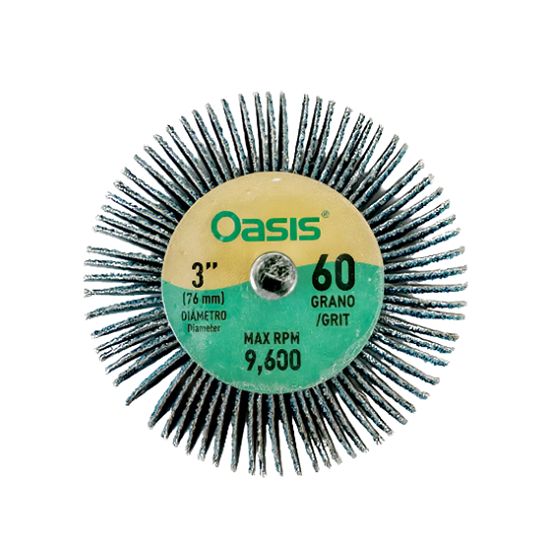
Choosing the Right Flap Disc Based on Material Hardness
So, how do you choose the right Universal Flap Disc based on the material hardness? Here are some tips:
- Know the material: First, identify the material you'll be working on. Is it soft like plastic or wood, or hard like steel or titanium?
- Consider the application: Determine the type of work you'll be doing, whether it's cutting, grinding, or finishing?
- Select the abrasive type: For soft materials, a softer abrasive like silicon carbide may be a good choice. For hard materials, opt for aluminum oxide or zirconia alumina.
- Choose the grit size: A coarser grit is better for removing large amounts of material, while a finer grit is for finishing.
In conclusion, the hardness of the material has a significant impact on the use of a Universal Flap Disc. It affects the cutting and grinding performance, surface finish, durability, heat generation, and compatibility with different applications. As a supplier, I'm always here to help you choose the right flap disc for your specific needs. If you're interested in purchasing Universal Flap Discs or have any questions about which ones are best for your projects, don't hesitate to get in touch for a procurement discussion.
References
- Abrasive Technology Handbook
- Industrial Grinding and Finishing Guide