

As a flap disc supplier, I understand that choosing the right flap disc can be a daunting task, especially for those who are new to the industry. With so many options available in the market, it's easy to get overwhelmed. However, selecting the appropriate flap disc is crucial for achieving optimal performance and efficiency in your grinding and finishing applications. In this blog post, I'll share some valuable insights and tips to help you make an informed decision.
Understanding Flap Disc Basics
Before delving into the selection process, it's essential to have a basic understanding of what a flap disc is and how it works. A flap disc is a type of abrasive tool used for grinding, blending, and finishing metal, stainless steel, and other materials. It consists of multiple overlapping abrasive flaps that are attached to a central hub. These flaps are typically made of abrasive grains bonded to a flexible backing material, such as cloth or paper.
The design of the flap disc allows for continuous self-sharpening as the abrasive grains wear down. This results in a consistent cutting action and a longer lifespan compared to other abrasive tools. Flap discs are available in various sizes, grits, and abrasive materials, each designed for specific applications and materials.
Factors to Consider When Choosing a Flap Disc
Application
The first step in choosing the right flap disc is to determine the specific application you'll be using it for. Different applications require different types of flap discs. For example, if you're working on heavy grinding and material removal, you'll need a flap disc with a coarse grit and a high abrasive concentration. On the other hand, if you're looking for a smooth finish, a finer grit flap disc would be more appropriate.
Some common applications for flap discs include:

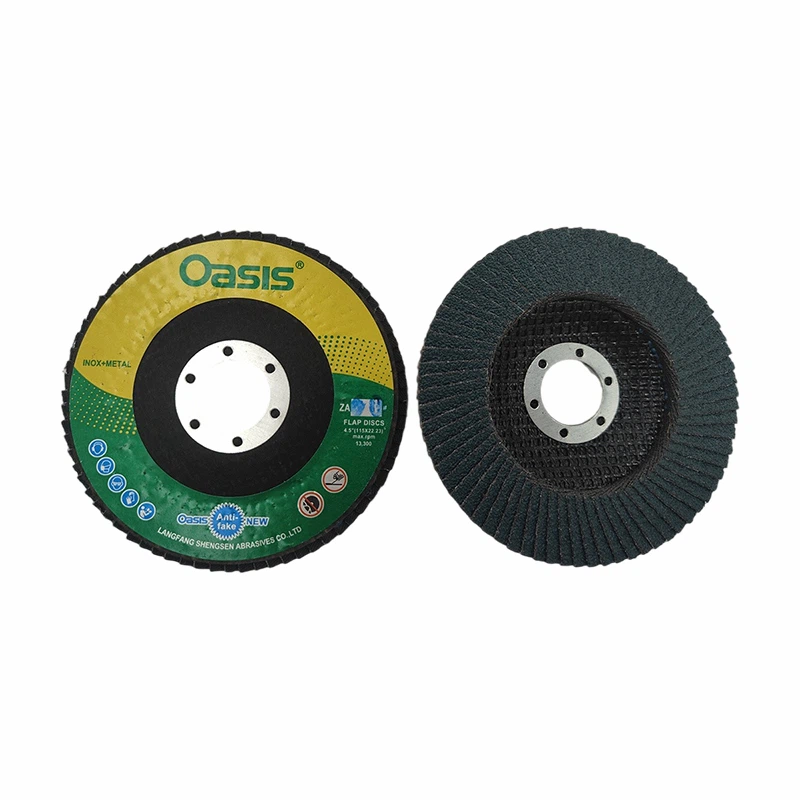
- Grinding and Beveling: Removing large amounts of material, such as weld beads or rough edges.
- Blending and Finishing: Smoothing out surfaces and creating a uniform finish.
- Deburring: Removing burrs and sharp edges from metal parts.
- Rust and Paint Removal: Stripping rust, paint, and other coatings from metal surfaces.
Material
The type of material you'll be working on is another important factor to consider. Different materials have different hardness levels and abrasion resistance, which means they require different types of abrasive materials. For example, when working on stainless steel, you'll need a flap disc with a zirconia alumina or ceramic abrasive, as these materials are more resistant to heat and wear. On the other hand, when working on mild steel, a aluminum oxide abrasive flap disc would be sufficient.
Here are some common materials and the recommended abrasive materials for each:
- Stainless Steel: Zirconia alumina, ceramic
- Mild Steel: Aluminum oxide
- Non-Ferrous Metals (e.g., aluminum, brass): Silicon carbide
- Wood: Aluminum oxide or silicon carbide
Grit Size
The grit size of a flap disc refers to the size of the abrasive grains on the flaps. A lower grit number indicates a coarser abrasive, which is suitable for heavy material removal. A higher grit number indicates a finer abrasive, which is better for finishing and polishing.
When choosing a grit size, consider the following:
- Coarse Grits (16 - 36): Ideal for heavy grinding and material removal, such as removing thick weld beads or rough edges.
- Medium Grits (40 - 80): Suitable for general-purpose grinding and blending, providing a good balance between material removal and finish.
- Fine Grits (100 - 120): Used for finishing and polishing, creating a smooth surface finish.
- Very Fine Grits (150+): For ultra-smooth finishes and final polishing.
Backing Material
The backing material of a flap disc plays a crucial role in its flexibility, durability, and performance. There are two main types of backing materials used in flap discs: cloth and paper.
- Cloth Backing: Cloth-backed flap discs are more flexible and durable, making them suitable for applications that require contour grinding or working on curved surfaces. They are also less likely to break or tear, which means they can withstand higher pressures and speeds.
- Paper Backing: Paper-backed flap discs are more rigid and less flexible than cloth-backed ones. They are typically used for flat surface grinding and finishing, where a more consistent finish is required.
Attachment Method
Flap discs are available with different attachment methods, including screw-on, resin-bonded, and hook-and-loop. The attachment method you choose will depend on the type of tool you'll be using and your personal preference.
- Screw-On: Screw-on flap discs are the most common type and are easy to install and remove. They are typically used with angle grinders and other power tools.
- Resin-Bonded: Resin-bonded flap discs are permanently attached to the hub, providing a more secure and stable connection. They are typically used for high-speed grinding and applications that require a lot of pressure.
- Hook-and-Loop: Hook-and-loop flap discs are easy to change and replace, making them ideal for applications where you need to switch between different grit sizes or types of flap discs quickly.
Size and Shape
Flap discs come in various sizes and shapes to accommodate different applications and tools. The size of the flap disc you choose will depend on the size of the tool you'll be using and the area you'll be working on.
- Size: Flap discs are available in diameters ranging from 4 inches to 9 inches. Larger flap discs are typically used for larger surface areas and heavy grinding, while smaller flap discs are more suitable for detailed work and hard-to-reach areas.
- Shape: Flap discs are available in different shapes, including flat, conical, and cylindrical. The shape you choose will depend on the specific application and the type of surface you'll be working on.
Specific Types of Flap Discs
Shaft-mounted Flap Wheel
The Shaft-mounted Flap Wheel is a specialized type of flap disc designed for use with shaft-mounted tools. It offers a unique combination of flexibility and durability, making it ideal for applications that require precision and control. These flap wheels are commonly used in industries such as automotive, aerospace, and metal fabrication for tasks like deburring, edge blending, and surface finishing on contoured or hard-to-reach areas.
Universal Flap Disc
The Universal Flap Disc is a versatile option that can be used on a wide range of materials and applications. It provides a good balance between material removal and finishing, making it a popular choice for general-purpose grinding and blending. Whether you're working on stainless steel, mild steel, or other metals, a universal flap disc can deliver consistent results.
Conclusion
Choosing the right flap disc is essential for achieving optimal performance and efficiency in your grinding and finishing applications. By considering factors such as application, material, grit size, backing material, attachment method, size, and shape, you can select the flap disc that best suits your needs.
If you're still unsure which flap disc is right for you, or if you have any questions about our products, please don't hesitate to contact us. Our team of experts is always ready to help you find the perfect solution for your specific requirements. We look forward to working with you and providing you with high-quality flap discs that will meet and exceed your expectations.
References
- Abrasive Engineering Handbook, 2nd Edition
- Industrial Abrasives: A Practical Guide