

What speed should I use with a cutting disc for metal?
When it comes to using a cutting disc for metal, one of the most critical factors that can significantly impact the cutting performance, safety, and the lifespan of the disc is the cutting speed. As a trusted supplier of high - quality cutting discs for metal, I understand the importance of getting this right, and I'm here to share some in - depth knowledge on this topic.
Understanding Cutting Speed
Cutting speed is defined as the relative speed between the cutting edge of the disc and the metal workpiece. It is usually measured in surface feet per minute (SFM) or meters per second (m/s). The appropriate cutting speed depends on several variables, including the type of metal being cut, the diameter of the cutting disc, and the material composition of the disc itself.
Factors Affecting the Optimal Cutting Speed
Type of Metal
Different metals have different hardness and thermal conductivity properties, which directly influence the cutting speed. For example, softer metals like aluminum and copper can generally tolerate higher cutting speeds compared to harder metals such as stainless steel and high - carbon steel.
Aluminum has a relatively low melting point and high thermal conductivity. This means that heat generated during cutting can dissipate quickly, allowing for faster cutting speeds. A cutting speed of around 1000 - 2000 SFM can be suitable for aluminum, depending on the specific alloy and the thickness of the material.
On the other hand, stainless steel is a much harder and more heat - resistant metal. High cutting speeds can cause excessive heat buildup, leading to premature wear of the cutting disc and potential damage to the workpiece. For stainless steel, a cutting speed in the range of 200 - 500 SFM is often recommended.
Diameter of the Cutting Disc
The diameter of the cutting disc also plays a crucial role in determining the cutting speed. Larger diameter discs have a greater circumference, which means that the outer edge of the disc travels a longer distance in one revolution compared to a smaller diameter disc. As a result, for a given rotational speed (RPM), a larger diameter disc will have a higher cutting speed at the outer edge.
For instance, if you are using a 4 - inch diameter cutting disc and a 10 - inch diameter disc at the same RPM, the 10 - inch disc will have a much higher cutting speed at its outer edge. Therefore, when using larger diameter discs, it may be necessary to reduce the RPM to maintain a safe and effective cutting speed.
Material Composition of the Cutting Disc
Cutting discs for metal come in various material compositions, each designed for specific applications. For example, Alloy&stone Cutting Disc is engineered to handle a wide range of metals, including alloys and stones. These discs often have a unique abrasive material and bond system that can withstand high - speed cutting and provide long - lasting performance.
Universal Cutting Discs, as the name suggests, are versatile and can be used for different types of metals. They are designed to offer a balance between cutting speed and durability. You can find more information about them on our website: Universal Cutting Disc.
Rail Cutting Discs are specifically designed for cutting rails, which are typically made of high - strength steel. These discs need to be able to handle the tough and thick material, and they often operate at lower cutting speeds to ensure precision and safety. Check out our Rail Cutting Disc for more details.
Calculating the Cutting Speed
To calculate the cutting speed, you can use the following formula:
[SFM=\frac{\pi\times D\times RPM}{12}]
where (SFM) is the surface feet per minute, (D) is the diameter of the cutting disc in inches, and (RPM) is the rotational speed of the disc in revolutions per minute.
If you want to calculate the cutting speed in meters per second, the formula is:
[v=\frac{\pi\times D\times n}{60000}]
where (v) is the cutting speed in m/s, (D) is the diameter of the disc in millimeters, and (n) is the rotational speed in RPM.
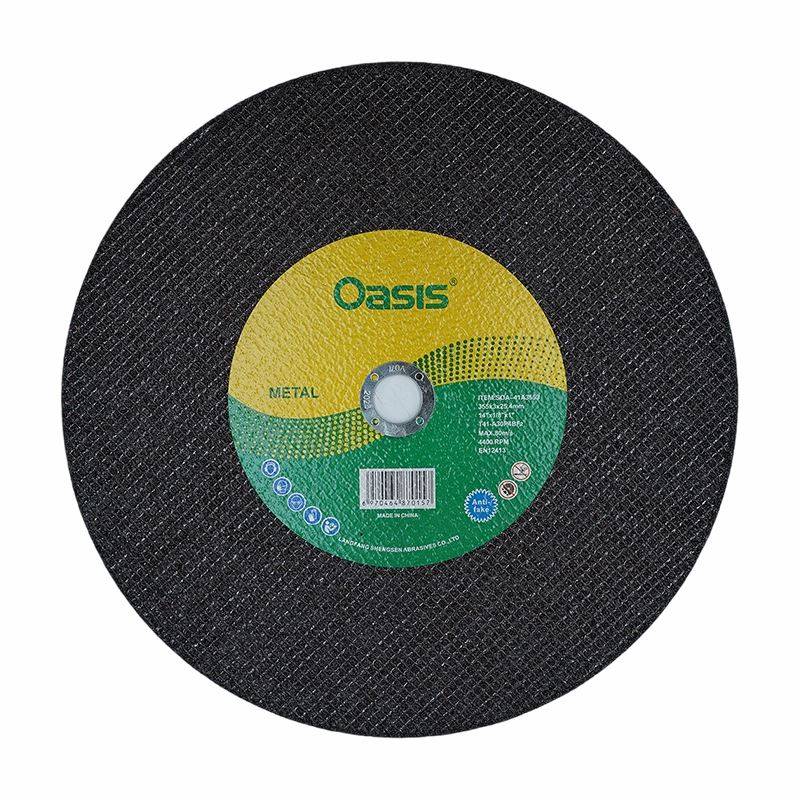
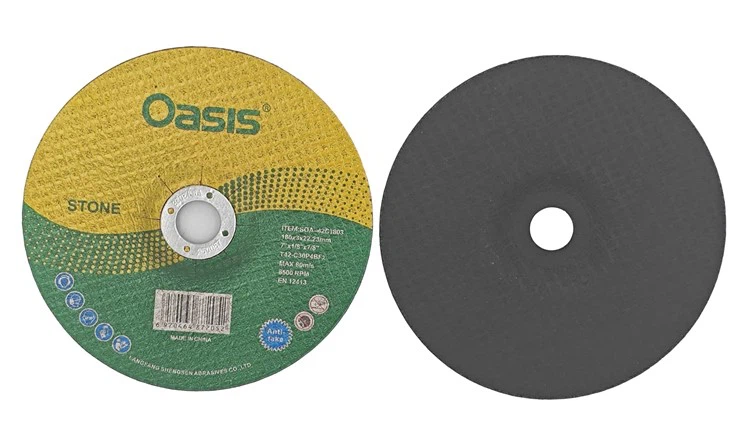
Let's say you have a 7 - inch diameter cutting disc rotating at 3000 RPM. Using the first formula:
[SFM=\frac{\pi\times7\times3000}{12}\approx 5497.79\ SFM]
Safety Considerations
Using the correct cutting speed is not only important for performance but also for safety. If the cutting speed is too high, the disc can overheat, leading to a higher risk of the disc shattering. This can cause serious injury to the operator and damage to the surrounding equipment.
Conversely, if the cutting speed is too low, the disc may not cut efficiently, resulting in a longer cutting time and increased wear on the disc. It is essential to follow the manufacturer's recommendations for the cutting speed and RPM to ensure safe and effective operation.
Tips for Choosing the Right Cutting Speed
- Refer to the Manufacturer's Guidelines: Always check the manufacturer's instructions that come with the cutting disc. These guidelines will provide specific recommendations for the optimal cutting speed based on the disc's specifications and the type of metal it is designed to cut.
- Start with a Lower Speed: If you are unsure about the appropriate cutting speed, it is better to start with a lower speed and gradually increase it while monitoring the cutting performance. This way, you can avoid potential problems such as disc overheating or excessive wear.
- Consider the Thickness of the Metal: Thicker metals may require lower cutting speeds to ensure a clean and precise cut. As the thickness of the metal increases, the cutting forces also increase, and a lower speed can help to manage these forces more effectively.
Conclusion
Selecting the right cutting speed for a metal cutting disc is a complex but crucial task. It requires a good understanding of the type of metal, the diameter of the disc, and the material composition of the disc. By following the guidelines provided by the manufacturer and considering the factors mentioned above, you can achieve optimal cutting performance, extend the lifespan of the cutting disc, and ensure a safe working environment.
If you are in the market for high - quality cutting discs for metal, we are here to help. Our range of cutting discs, including Alloy&stone Cutting Disc, Universal Cutting Disc, and Rail Cutting Disc, are designed to meet the diverse needs of our customers. We invite you to contact us for more information and to discuss your specific requirements. Whether you are a professional metalworker or a DIY enthusiast, we have the right cutting disc for you. Let's start a conversation and find the perfect solution for your metal cutting needs.
References
- ASM Handbook Volume 16: Machining. ASM International.
- Machinery's Handbook, 31st Edition. Industrial Press Inc.