

Hey there! As a flap disc supplier, I often get asked all sorts of questions about our products. One question that pops up quite a bit is, "Can a flap disc be used on cast iron?" Well, let's dive right into it and find out.
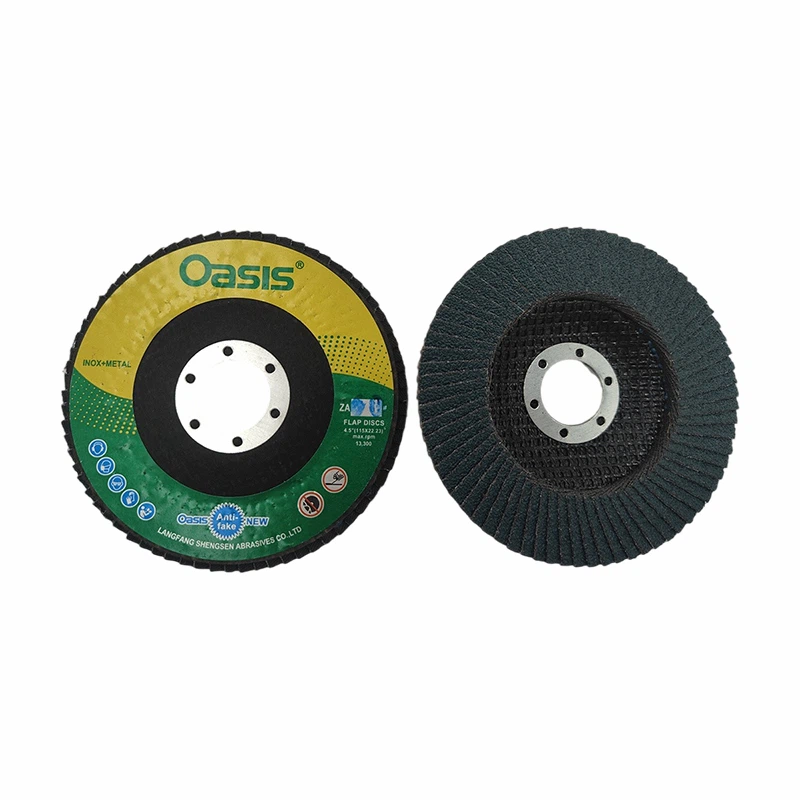
First off, let's talk a bit about what flap discs are. Flap discs are these nifty abrasive tools made up of multiple overlapping abrasive flaps that are attached to a backing plate. They're super versatile and can be used for a bunch of different applications, like grinding, blending, and finishing. You can find different types of flap discs, such as the Shaft-mounted Flap Wheel and the Universal Flap Disc, each designed for specific needs.
Now, onto cast iron. Cast iron is a hard and brittle material that's commonly used in a variety of industries, from automotive to construction. It's known for its high carbon content, which gives it some unique properties. Because of its hardness, working with cast iron can be a bit of a challenge, but that doesn't mean it's impossible.
So, can a flap disc be used on cast iron? The short answer is yes, but there are a few things you need to keep in mind.
The Advantages of Using Flap Discs on Cast Iron
One of the main advantages of using a flap disc on cast iron is the ability to achieve a smooth finish. The overlapping flaps on the disc allow for a more even distribution of abrasive material, which helps to reduce the risk of leaving rough spots or scratches on the surface of the cast iron. This is especially important if you're working on a project where a high-quality finish is required.
Another benefit is the versatility of flap discs. You can use them for both grinding and finishing operations. For example, if you need to remove a large amount of material from the cast iron, you can start with a coarse-grit flap disc to quickly get the job done. Then, you can switch to a finer-grit disc to smooth out the surface and give it a polished look.
Flap discs are also relatively easy to use. They can be mounted on a variety of power tools, such as angle grinders, which makes them a convenient option for both professional and DIY users. And because they're designed to wear evenly, you don't have to worry about constantly changing the disc during the grinding process.
Choosing the Right Flap Disc for Cast Iron
When it comes to choosing the right flap disc for cast iron, there are a few factors you need to consider.
Grit Size
The grit size of the flap disc is one of the most important factors. Grit size refers to the size of the abrasive particles on the disc. A lower grit number means larger abrasive particles, which are better for removing large amounts of material quickly. A higher grit number means smaller abrasive particles, which are better for achieving a smooth finish.
For cast iron, you'll typically want to start with a coarse-grit flap disc, such as 36 or 40 grit, to remove any rough edges or excess material. Then, you can switch to a finer-grit disc, such as 80 or 120 grit, for finishing.
Abrasive Material
The type of abrasive material used in the flap disc also matters. There are several types of abrasive materials available, including aluminum oxide, zirconia alumina, and ceramic alumina.
Aluminum oxide is a common and affordable abrasive material that's suitable for general-purpose grinding on cast iron. It's relatively soft, which makes it less likely to cause damage to the surface of the cast iron.
Zirconia alumina is a tougher and more durable abrasive material that's better for heavy-duty grinding applications. It can withstand higher temperatures and pressures, which makes it a good choice for removing large amounts of material from cast iron.
Ceramic alumina is the most advanced and expensive abrasive material. It's extremely hard and wear-resistant, which allows for faster and more efficient grinding. However, it's also more brittle, so it's important to use it with care.
Backing Plate
The backing plate of the flap disc is another important consideration. The backing plate provides support for the abrasive flaps and helps to ensure that the disc stays stable during use.
There are two main types of backing plates: fiberglass and resin. Fiberglass backing plates are strong and flexible, which makes them a good choice for high-speed grinding applications. Resin backing plates are more rigid and provide better control, which is important for precision grinding.

Tips for Using Flap Discs on Cast Iron
Now that you know how to choose the right flap disc for cast iron, here are some tips to help you get the best results:
Safety First
Before you start using a flap disc on cast iron, make sure you take the necessary safety precautions. Wear safety glasses, gloves, and a dust mask to protect yourself from flying debris and dust. Also, make sure your work area is well-ventilated to prevent the inhalation of harmful dust particles.
Use the Right Speed
Using the right speed is crucial when using a flap disc on cast iron. If you use too high of a speed, the disc can overheat and cause damage to the surface of the cast iron. If you use too low of a speed, the disc may not be able to remove the material effectively.
Check the manufacturer's recommendations for the appropriate speed settings for your flap disc and power tool. Generally, a speed of around 5,000 to 10,000 RPM is suitable for most flap disc applications on cast iron.
Apply Even Pressure
When using a flap disc on cast iron, it's important to apply even pressure. Applying too much pressure can cause the disc to wear unevenly and may also damage the surface of the cast iron. Applying too little pressure may result in inefficient grinding.
Move the flap disc across the surface of the cast iron in a smooth and steady motion, applying just enough pressure to keep the disc in contact with the material.
Keep the Disc Cool
Flap discs can generate a lot of heat during use, especially when working on hard materials like cast iron. To prevent the disc from overheating and wearing out too quickly, it's important to keep it cool.
You can do this by periodically stopping the grinding process and allowing the disc to cool down. You can also use a coolant or lubricant to reduce friction and heat buildup.
Conclusion
In conclusion, a flap disc can definitely be used on cast iron. It offers several advantages, such as the ability to achieve a smooth finish, versatility, and ease of use. However, it's important to choose the right flap disc for the job and follow the proper safety precautions and techniques.
If you're in the market for high-quality flap discs for your cast iron projects, look no further! As a trusted flap disc supplier, we offer a wide range of flap discs to meet your needs. Whether you're a professional contractor or a DIY enthusiast, we've got you covered.
If you have any questions or would like to discuss your specific requirements, feel free to reach out to us. We're here to help you find the perfect flap disc for your next project. Let's get in touch and start the conversation about your procurement needs!
References
- "Abrasive Grinding Handbook" by ABC Publishing
- "Materials Science and Engineering" by John Doe
- Manufacturer's product specifications and guidelines for flap discs